Sunscreen Testing: What Really Matters Behind SPF 50+?
SPF, PA++++, broad spectrum, water resistant: what each claim measures, how it is tested, and what it still cannot tell you.
Sonal Verma
November 16, 202616 min read
A sunscreen can have SPF 50+, PA++++, broad spectrum protection, dermatological testing, water resistance and a dozen other claims printed on its packaging.
But what do these claims actually tell us? Which ones are measured in a laboratory? Which ones have been tested on human skin? And how much do they tell us about what happens when someone wears that sunscreen every day?
In short
Three different questions: a sunscreen can be tested for how well it blocks UV light, how well it protects human skin, and how well it keeps working under everyday conditions. No single test answers all three.
SPF is about sunburn (UVB): SPF 50 filters about 98% of sunburn-weighted UV at the test amount of 2 mg per square centimetre. Most people apply much less.
PA is about UVA: PA++++ only tells you the UVA protection factor is 16 or more. It does not tell you how much more.
Testing is changing: two ISO methods from December 2024 can estimate SPF without giving volunteers sunburn, and the EU backed the lab method in September 2026.
The real question: not “was this sunscreen tested?” but “what was tested, how, and what does the result actually prove?”
Three questions, three kinds of test
Think of a sunscreen like a car. A car can perform brilliantly during an engine test. It can pass a crash test. And it can be evaluated on actual roads. Each test tells us something important, but none answers every question about the car. Sunscreen testing works similarly.
Laboratory testing
The question it answers
How much UV radiation passes through a carefully prepared film of sunscreen?
Human skin testing
The question it answers
How much UV exposure is needed to cause a measurable response on skin with sunscreen, compared with skin without it?
Performance testing
The question it answers
Does protection hold up after water exposure, and how well does the formula behave when applied, rubbed or worn?
Kind of test
The question it answers
Laboratory testing
How much UV radiation passes through a carefully prepared film of sunscreen?
Human skin testing
How much UV exposure is needed to cause a measurable response on skin with sunscreen, compared with skin without it?
Performance testing
Does protection hold up after water exposure, and how well does the formula behave when applied, rubbed or worn?
The important development in sunscreen science is that these categories are beginning to overlap.
In December 2024, the International Organization for Standardization (ISO) published two major alternatives to traditional SPF testing: ISO 23675, which measures sunscreen on laboratory plates, and ISO 23698, which combines optical measurements on real skin with laboratory measurements, without deliberately causing sunburn.
In September 2026, the European Commission reported encouraging results from a comparison of traditional testing and the newer in vitro method across 74 sunscreen products, and encouraged manufacturers to prioritise validated methods that avoid exposing volunteers to harmful UV.
Which sunscreen test is actually the best? The answer depends on what we want the test to prove.
01
How sunscreen testing has changed
The history of SPF testing is really the history of scientists trying to answer one question more accurately, with less variation and less human UV exposure.
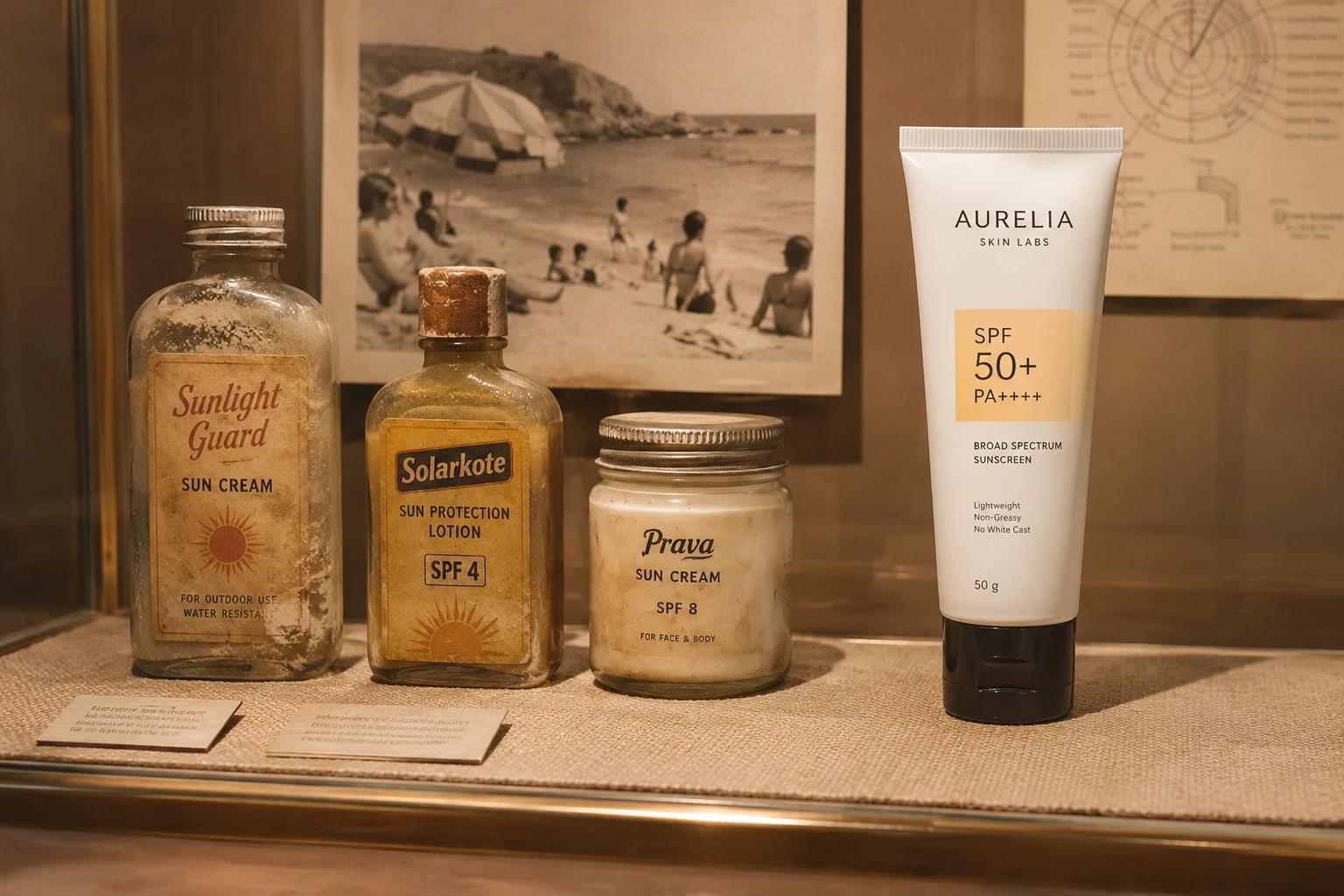
Early sun creams were rated against visible sunburn. Today’s packs carry several separately tested claims.
1940s to 1960s: SPF is born
What changed
Early research focused on preventing visible sunburn. Swiss chemist Franz Greiter is credited with developing the SPF concept in 1962. The question was simple: how much longer can protected skin tolerate UV before burning?
1970s to 1990s: human testing is standardised
What changed
The FDA proposed a standardised SPF method in 1976 and Europe introduced its COLIPA method in 1994. Volunteers’ skin was exposed to controlled UV doses, establishing the traditional sunburn-based SPF test.
2000s to early 2010s: UVA matters too
What changed
UVA, linked to pigmentation, premature ageing and skin cancer risk, became a separate testing priority. The EU’s 2006 recommendation set a benchmark for balanced UVA protection. ISO 24444:2010 standardised human SPF testing and ISO 24443:2012 standardised lab UVA testing.
2019 to 2022: refined international methods
What changed
Updated standards, ISO 24444:2019 for human SPF and ISO 24443:2021 for lab UVA, became widely used reference methods. The industry was already using a mix of human and lab testing.
2024 to 2025: two alternatives emerge
What changed
ISO 23675 introduced a fully lab-based SPF method using two types of plates. ISO 23698 introduced a hybrid optical method on human skin that does not induce sunburn. Validation studies published in 2025 reported results comparable with the reference methods for supported product types.
2026: regulators respond
What changed
India published its dedicated sunscreen standard, IS 19685:2026. The EU reported encouraging results for the lab SPF method in September. South Korea’s MFDS proposed accepting ISO in vitro methods for SPF and PA claims.
Period
What changed
1940s to 1960s: SPF is born
Early research focused on preventing visible sunburn. Swiss chemist Franz Greiter is credited with developing the SPF concept in 1962. The question was simple: how much longer can protected skin tolerate UV before burning?
1970s to 1990s: human testing is standardised
The FDA proposed a standardised SPF method in 1976 and Europe introduced its COLIPA method in 1994. Volunteers’ skin was exposed to controlled UV doses, establishing the traditional sunburn-based SPF test.
2000s to early 2010s: UVA matters too
UVA, linked to pigmentation, premature ageing and skin cancer risk, became a separate testing priority. The EU’s 2006 recommendation set a benchmark for balanced UVA protection. ISO 24444:2010 standardised human SPF testing and ISO 24443:2012 standardised lab UVA testing.
2019 to 2022: refined international methods
Updated standards, ISO 24444:2019 for human SPF and ISO 24443:2021 for lab UVA, became widely used reference methods. The industry was already using a mix of human and lab testing.
2024 to 2025: two alternatives emerge
ISO 23675 introduced a fully lab-based SPF method using two types of plates. ISO 23698 introduced a hybrid optical method on human skin that does not induce sunburn. Validation studies published in 2025 reported results comparable with the reference methods for supported product types.
2026: regulators respond
India published its dedicated sunscreen standard, IS 19685:2026. The EU reported encouraging results for the lab SPF method in September. South Korea’s MFDS proposed accepting ISO in vitro methods for SPF and PA claims.
The conversation is moving from whether laboratory methods can estimate SPF to how regulators should recognise them.
02
The five main test methods
Imagine you have developed a new SPF 50 sunscreen. You send identical samples to five different laboratories, and each uses a different approach.
Test A: Human SPF test (ISO 24444:2019, in vivo)
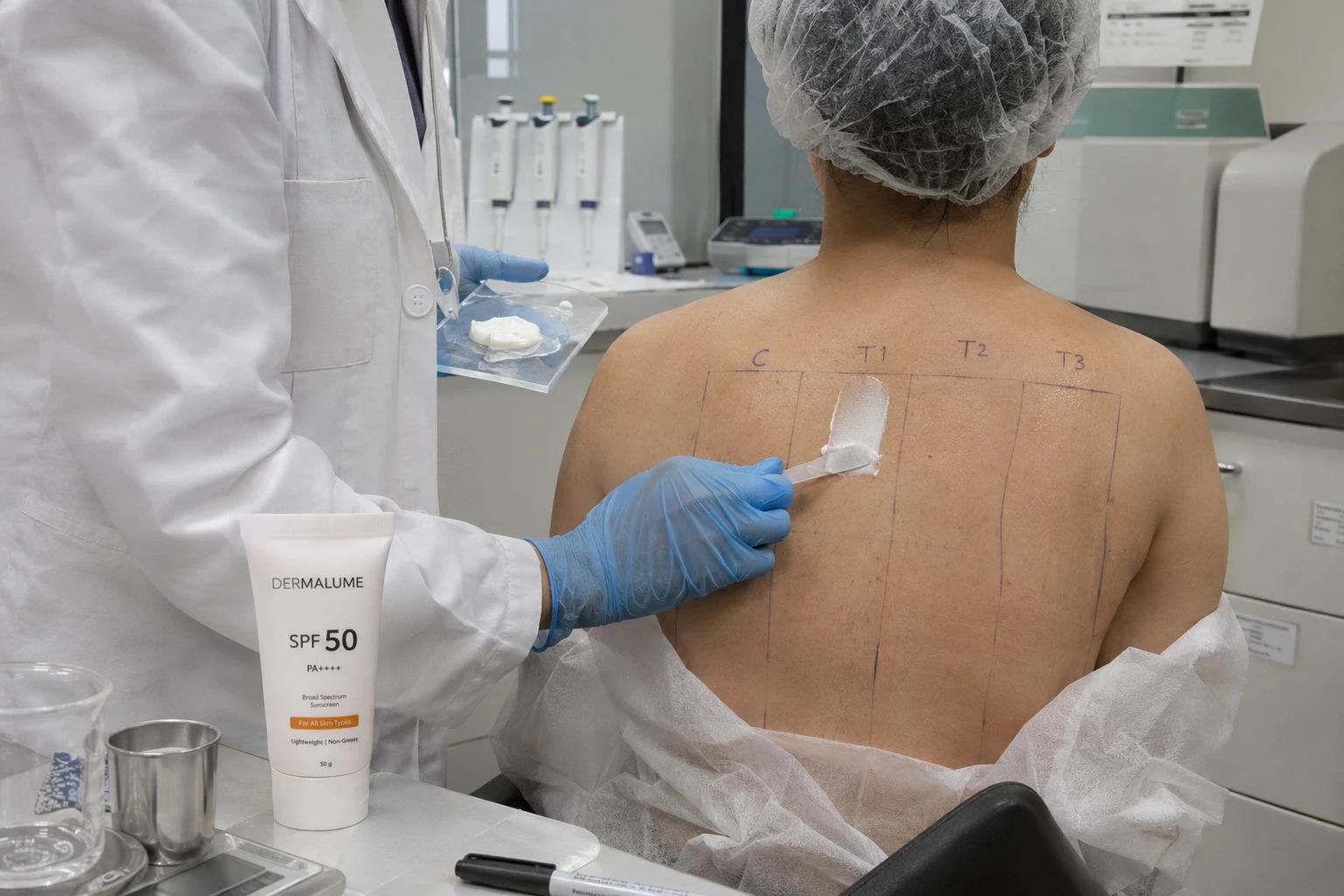
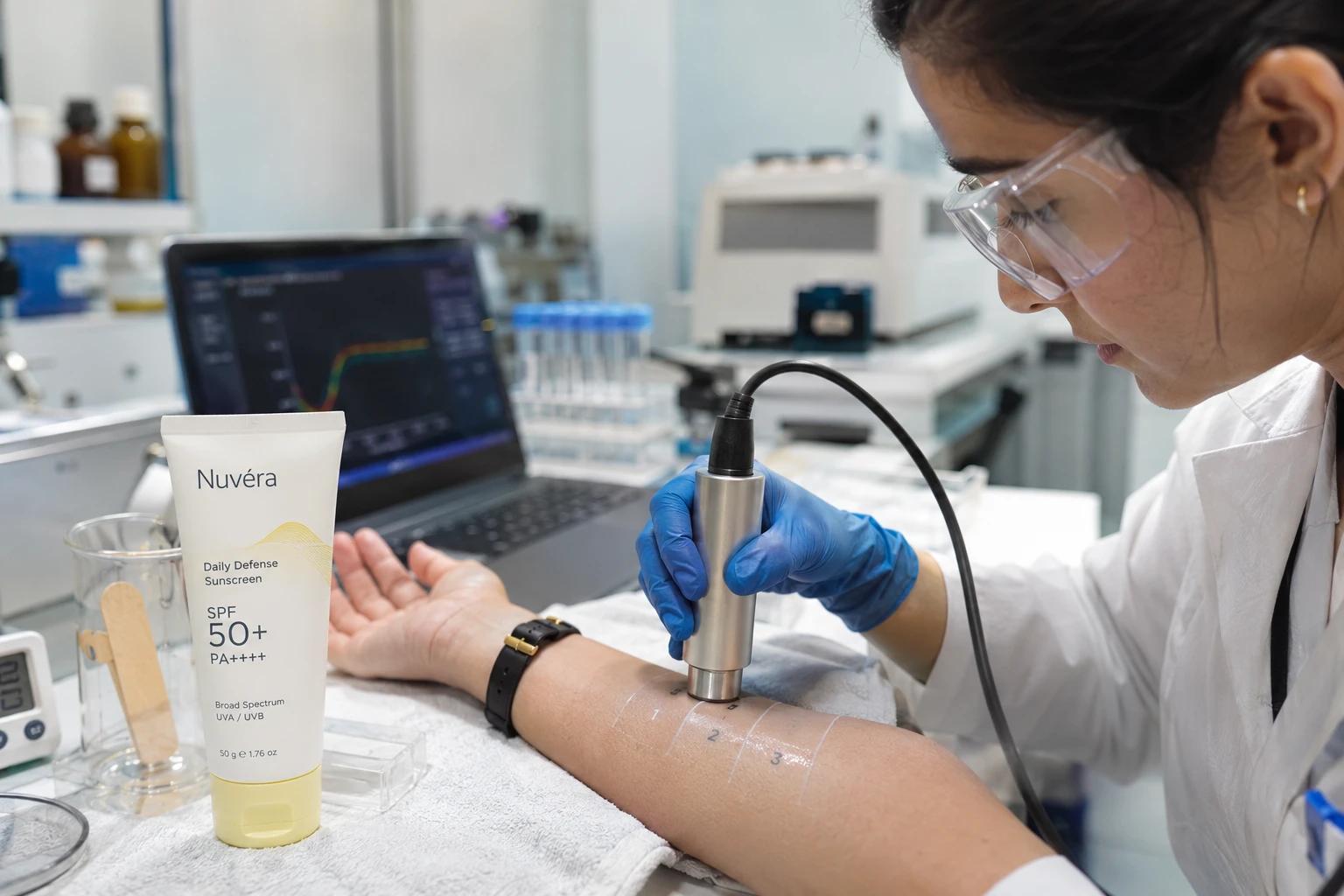
In a human SPF test, sunscreen is spread over marked areas of a volunteer’s back before controlled UV exposure.
Scientists apply sunscreen to volunteers’ backs at a measured 2 mg per square centimetre. Small areas receive controlled UV exposure. The UV dose needed to produce minimal redness is compared with untreated skin.
Analogy: testing how a car protects its occupants during an actual controlled crash.
Test B: Laboratory SPF test (ISO 23675:2024, Double Plate, in vitro)
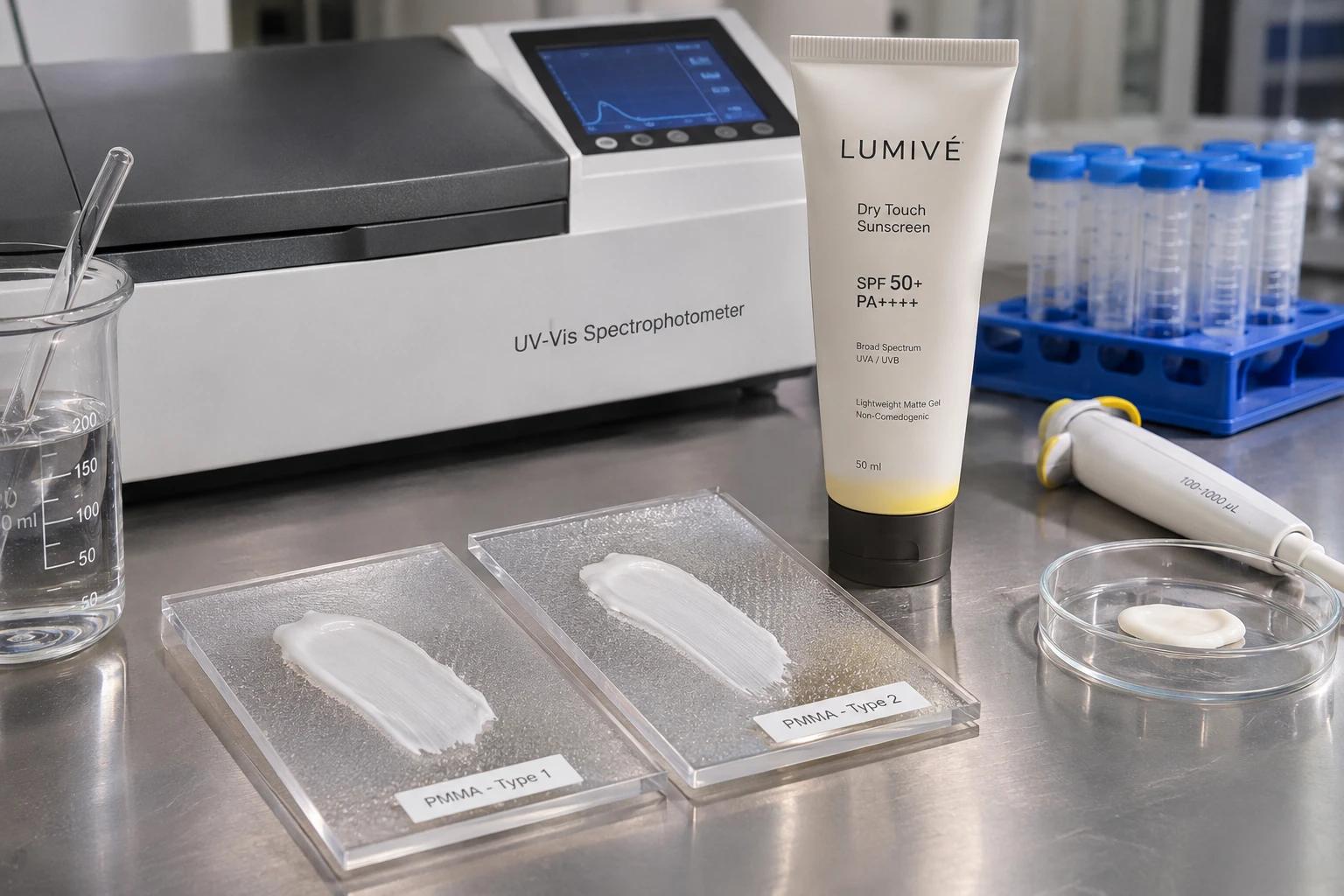
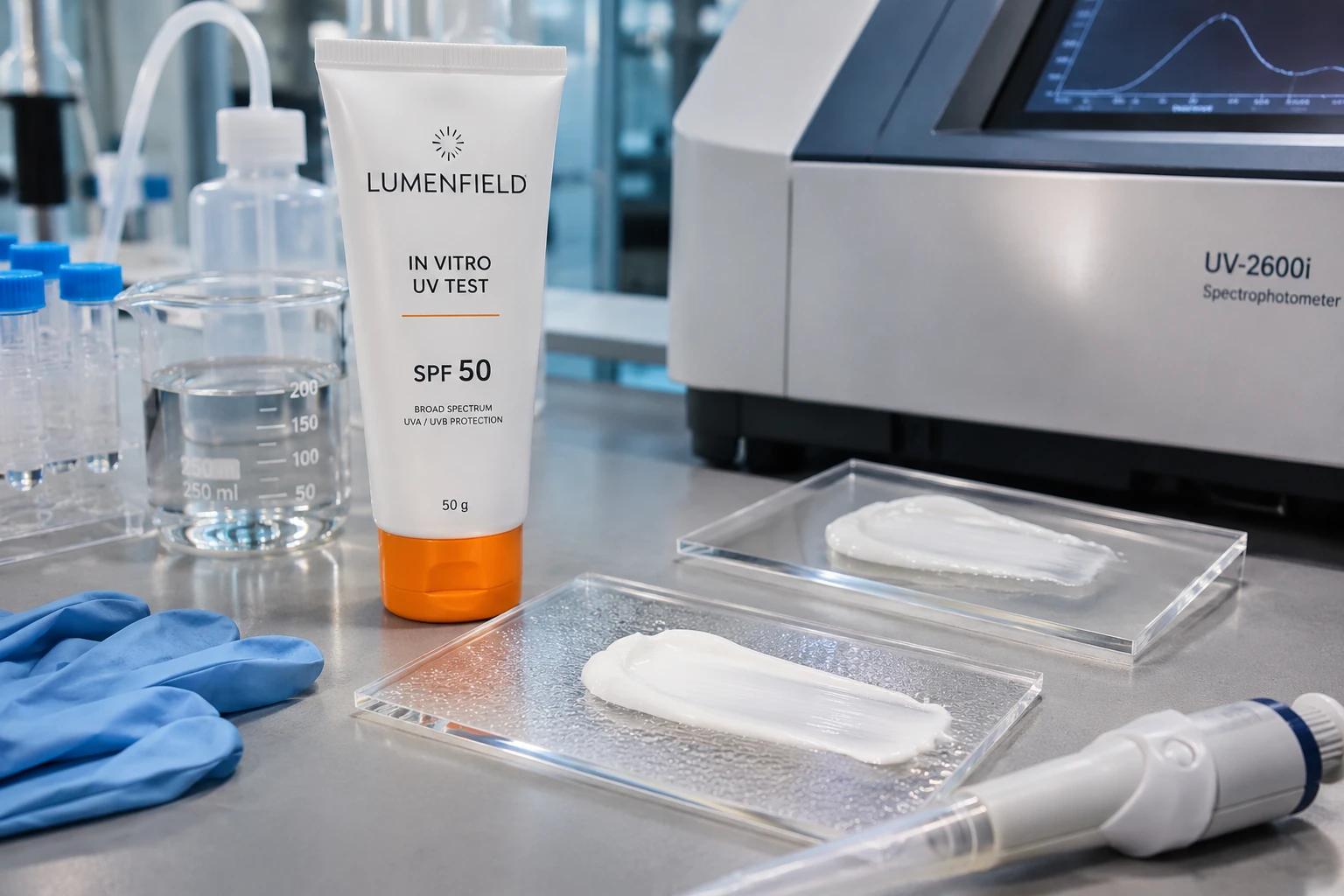
The Double Plate method spreads sunscreen on two kinds of acrylic (PMMA) plate and measures the UV that passes through.
Scientists spread sunscreen onto two types of acrylic plate. Instruments measure how much UV passes through the film before and after standardised UV exposure, and those measurements are used to calculate SPF.
Analogy: evaluating a car’s protective structure on highly controlled test equipment.
Test C: Hybrid skin and lab test (ISO 23698:2024, HDRS)
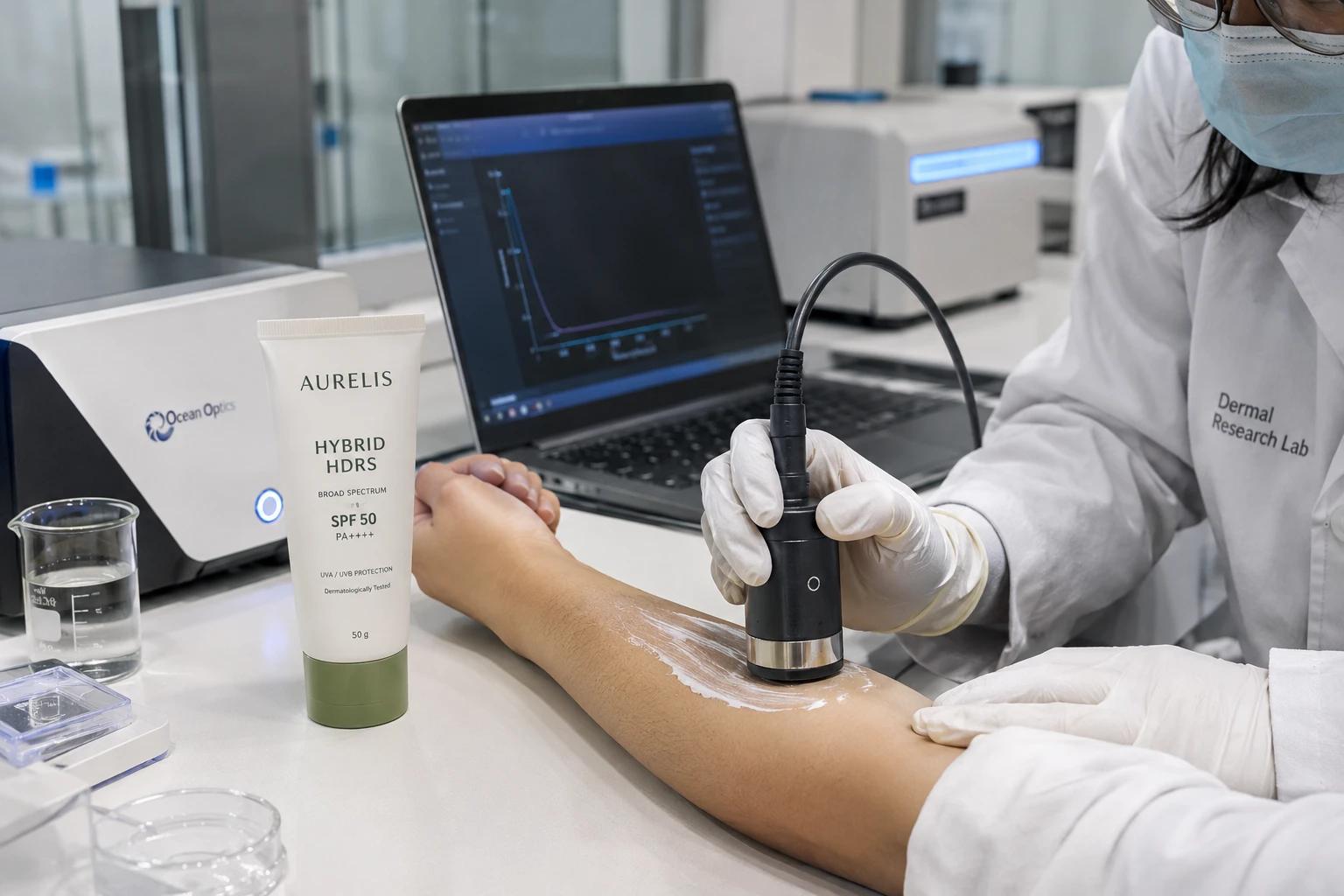
Hybrid Diffuse Reflectance Spectroscopy reads how light interacts with sunscreen on skin, with no sunburn needed.
Scientists apply sunscreen to human skin and use an optical instrument to measure how light interacts with the film. They combine these readings with laboratory measurements to estimate SPF and UVA protection, without deliberately creating sunburn.
Analogy: testing a car with real physical measurements, without needing a destructive crash.
Test D: UVA protection test (ISO 24443:2021, in vitro)
In vitro UVA testing measures absorbance through a sunscreen film on a plate.
A sunscreen film is applied to a test plate and its UVA absorbance is measured. The standard method uses an existing in vivo SPF result to scale its absorbance curve. A human UVA test also exists, under ISO 24442:2022.
Analogy: a separate test of how well a car protects against a different kind of impact.
Test E: Water resistance test (ISO 16217:2020 and ISO 18861:2020)
Protection is assessed in connection with controlled water immersion. Scientists evaluate how much SPF protection remains after the specified exposure.
Analogy: taking the car through rain after it has passed its basic performance tests.
How they compare
Human SPF, ISO 24444
Main strength
Measures a biological sunburn response
Main limitation
Human variability; UV exposure for volunteers
Double Plate, ISO 23675
Main strength
Reproducible optical measurement with no human exposure
Main limitation
Cannot assess actual wear or water resistance; excludes sticks and powders
Hybrid HDRS, ISO 23698
Main strength
Measures a film on real skin without causing sunburn; can estimate SPF and UVA
Main limitation
Needs specialist equipment and trained operators; not validated for powders
In vitro UVA, ISO 24443
Main strength
Measures UVA protection and breadth of coverage
Main limitation
Does not establish SPF on its own; relies on an in vivo SPF for scaling
Water resistance, ISO 16217 / 18861
Main strength
Measures protection retained after immersion
Main limitation
Cannot predict every mix of sweat, rubbing and towelling
Method
Main strength
Main limitation
Human SPF, ISO 24444
Measures a biological sunburn response
Human variability; UV exposure for volunteers
Double Plate, ISO 23675
Reproducible optical measurement with no human exposure
Cannot assess actual wear or water resistance; excludes sticks and powders
Hybrid HDRS, ISO 23698
Measures a film on real skin without causing sunburn; can estimate SPF and UVA
Needs specialist equipment and trained operators; not validated for powders
In vitro UVA, ISO 24443
Measures UVA protection and breadth of coverage
Does not establish SPF on its own; relies on an in vivo SPF for scaling
Water resistance, ISO 16217 / 18861
Measures protection retained after immersion
Cannot predict every mix of sweat, rubbing and towelling
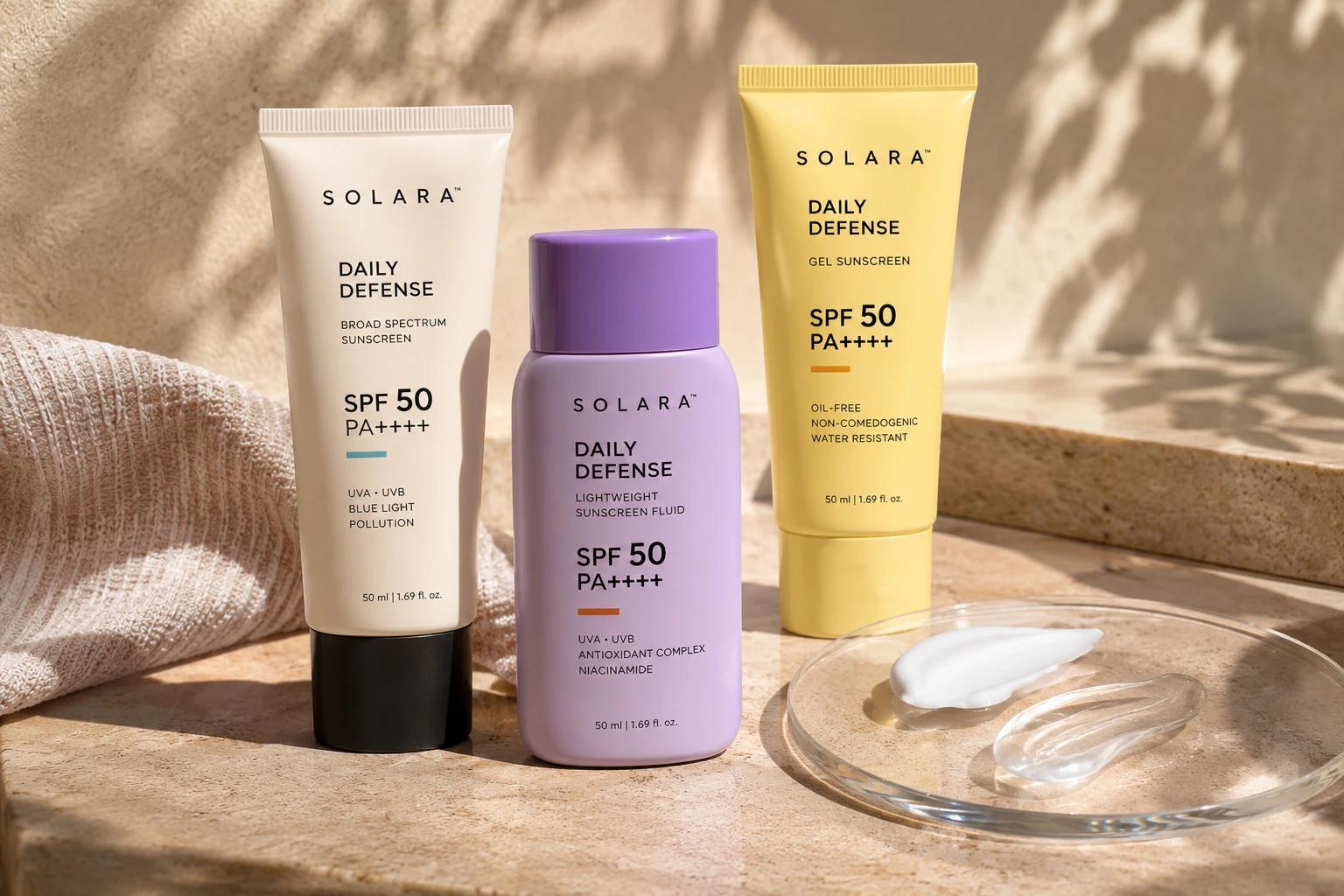
A cream, a fluid and a gel from the same range can behave very differently under the same test.
The newest method is not automatically the right method for every sunscreen.
A lightweight lotion, a thick mineral cream, a clear gel and an SPF powder can behave very differently during testing. The laboratory must choose a method validated for that particular formulation, and the regulator in the destination market must accept the evidence for the intended claim.
03
What SPF actually means
Here are three sunscreens applied properly under standardised test conditions:
SPF 15
Sunburn-weighted UV filtered
93.3%
UV transmitted
6.7%
SPF 30
Sunburn-weighted UV filtered
96.7%
UV transmitted
3.3%
SPF 50
Sunburn-weighted UV filtered
98%
UV transmitted
2%
SPF
Sunburn-weighted UV filtered
UV transmitted
SPF 15
93.3%
6.7%
SPF 30
96.7%
3.3%
SPF 50
98%
2%
These are approximate values derived from the SPF definition (1 ÷ SPF is the share transmitted), assuming the standard test thickness.
At first glance SPF 30 and SPF 50 look almost identical. But another way to see it: SPF 50 lets through about 40% less sunburn-causing UV than SPF 30 under equivalent conditions. That can matter during significant sun exposure. It still does not mean you can stay outside for 50 hours, or that SPF 50 gives double the protection of SPF 25 in everyday use.
The application problem
In the lab, scientists apply a carefully measured 2 mg per square centimetre of skin. At home, a person might use half that, spread it unevenly, wipe their face with a towel, or sweat on the commute.
Research consistently finds that people apply substantially less sunscreen than the test amount. This is one of the biggest gaps between a sunscreen passing a test and a sunscreen protecting someone in daily life.
The SPF on the pack is a standardised test result, not a personal prediction of the protection you receive.
04
SPF, PA, UVA and broad spectrum explained
These labels are related, but they measure different things. Think of sunlight as two problems your sunscreen needs to address.
PA describes UVA protection; SPF describes protection against sunburn-causing UVB. A good sunscreen needs both.
What it does
UVB: the sunburn problem
Contributes strongly to sunburn and skin cancer risk
UVA: the pigmentation and ageing problem
Contributes to pigmentation, premature ageing and skin cancer risk
The label that measures it
UVB: the sunburn problem
SPF: protection against sunburn-producing UV
UVA: the pigmentation and ageing problem
UVA PF or PA: protection against UVA
UVB: the sunburn problem
UVA: the pigmentation and ageing problem
What it does
Contributes strongly to sunburn and skin cancer risk
Contributes to pigmentation, premature ageing and skin cancer risk
The label that measures it
SPF: protection against sunburn-producing UV
UVA PF or PA: protection against UVA
Both UVA and UVB can harm skin, and their effects overlap.
What the PA symbols mean
PA+
Measured UVA protection factor
2 to less than 4
PA++
Measured UVA protection factor
4 to less than 8
PA+++
Measured UVA protection factor
8 to less than 16
PA++++
Measured UVA protection factor
16 or higher
Label
Measured UVA protection factor
PA+
2 to less than 4
PA++
4 to less than 8
PA+++
8 to less than 16
PA++++
16 or higher
A sunscreen showing PA++++ has demonstrated a UVA protection factor of at least 16 under the relevant test method. But PA++++ tells you the minimum category, not the actual number. A sunscreen with UVA PF 17 and another with UVA PF 40 can both display PA++++, which makes them look identical on the pack even though their measured UVA protection differs substantially.
What about broad spectrum?
The meaning depends on where the product is sold. The US FDA mainly uses a measure called critical wavelength: to be labelled broad spectrum, a product must reach at least 370 nanometres. The EU’s 2006 recommendation asks for both a critical wavelength of at least 370 nm and UVA protection of at least one third of the SPF. India’s new BIS sunscreen standard also sets out both criteria.
Here is the difference. A test showing that a sunscreen covers a wide range of UVA wavelengths tells us the breadth of protection. A UVA protection factor tells us its strength. It is like comparing an umbrella’s width with how well its fabric keeps rain out: both matter, but they are not interchangeable.
For anyone concerned about pigmentation, this is why an actual UVA rating can be more informative than the words “broad spectrum” alone.
05
Which test methods are best today?
There is no scientifically defensible single winner for all products and claims. But the evidence available in 2026 supports some practical recommendations.
Establishing SPF on suitable creams, lotions and gels
Method
ISO 23675:2024 (Double Plate)
Our assessment
Strong emerging option. No human UV exposure, strong reproducibility in validation studies, backed by the European Commission and Cosmetics Europe.
Skin-based measurement without sunburn
Method
ISO 23698:2024 (HDRS)
Our assessment
Strong emerging option. Reads the sunscreen film on human skin optically and can estimate SPF, UVA PF and breadth of UVA coverage.
Established regulatory acceptance
Method
ISO 24444:2019 (human SPF)
Our assessment
Still an important reference method, especially where a market has not yet recognised the newer alternatives.
UVA claims
Method
ISO 24443:2021 (lab) or ISO 24442:2022 (human)
Our assessment
Well established. ISO 23698 can also provide UVA results where accepted.
Swimming, sport and heavy sweating
Method
Water resistance and practical wear testing
Our assessment
Essential. A strong static SPF result alone cannot establish water resistance.
Goal
Method
Our assessment
Establishing SPF on suitable creams, lotions and gels
ISO 23675:2024 (Double Plate)
Strong emerging option. No human UV exposure, strong reproducibility in validation studies, backed by the European Commission and Cosmetics Europe.
Skin-based measurement without sunburn
ISO 23698:2024 (HDRS)
Strong emerging option. Reads the sunscreen film on human skin optically and can estimate SPF, UVA PF and breadth of UVA coverage.
Established regulatory acceptance
ISO 24444:2019 (human SPF)
Still an important reference method, especially where a market has not yet recognised the newer alternatives.
UVA claims
ISO 24443:2021 (lab) or ISO 24442:2022 (human)
Well established. ISO 23698 can also provide UVA results where accepted.
Swimming, sport and heavy sweating
Water resistance and practical wear testing
Essential. A strong static SPF result alone cannot establish water resistance.
Newer methods measure the sunscreen film on skin optically, so volunteers are not deliberately sunburned.
The two newer methods are strong alternatives, but their legal acceptance is not uniform across countries.
A real-world example from Australia
In June 2025, Australian consumer group CHOICE tested 20 sunscreens carrying SPF 50 or SPF 50+ claims and reported that 16 did not meet its interpretation of the advertised ratings. Australia’s regulator, the TGA, subsequently reported that 18 did not meet the Australian threshold, because SPF 50+ requires a measured result of at least 60 in that market. One product returned an initial SPF result of 4 and was recalled; other findings prompted further investigations.
This is not evidence that all sunscreens are unreliable. It is evidence that a test report is only as valuable as the method, the laboratory’s quality, the formulation tested and the consistency of the results.
Human testing itself can vary significantly between laboratories. The same formula can produce different results because of differences in application, individual skin responses and how redness is assessed. That is one reason the newer, more reproducible methods are attracting scientific interest.
06
If you are buying sunscreen, what should you look for?
You are really buying four things: UVB protection, UVA protection, durability and a formula you will actually use.
The best sunscreen is one you will apply generously every day, so texture matters as much as the number.
Your sunscreen checklist
SPF 30 or higher. For regular daily use, SPF 30 is a sensible minimum. SPF 50 or 50+ adds a margin for strong sun and frequent outdoor activity.
Clearly stated UVA protection. Look for PA++++ or a comparable, substantiated UVA rating. A disclosed UVA PF tells you more than PA++++ alone.
Broad spectrum protection. Prefer evidence of both UVA and UVB coverage, and remember that the criteria vary by country.
Water resistance when relevant. If you swim, exercise or sweat heavily, look for a tested 40 or 80 minute water resistance claim, or your region’s equivalent.
A texture you can apply generously. Consider comfort, white cast, eye irritation, finish and how easily you can reapply it.
Clear manufacturer and product information. Check the expiry date, batch number, ingredient list and the responsible manufacturer or importer.
Claims that matter less than people assume
Dermatologist tested
What to understand
Tells you a dermatologist was involved in some testing. It does not establish SPF.
Clinically tested
What to understand
Depends entirely on the study. Ask what was measured, and on whom.
SPF 100
What to understand
Can mean higher tested sunburn protection, but application, UVA coverage and wear still matter.
Mineral sunscreen
What to understand
Describes the type of UV filter, not a higher SPF or automatically better protection.
Reef safe
What to understand
There is no universally accepted standard definition that establishes environmental safety.
Blue light protection
What to understand
Can be meaningful when substantiated, but testing is less standardised than UV testing.
12 hour protection
What to understand
Needs direct supporting evidence. A static SPF test alone does not show protection lasting 12 hours in normal use.
Claim on the pack
What to understand
Dermatologist tested
Tells you a dermatologist was involved in some testing. It does not establish SPF.
Clinically tested
Depends entirely on the study. Ask what was measured, and on whom.
SPF 100
Can mean higher tested sunburn protection, but application, UVA coverage and wear still matter.
Mineral sunscreen
Describes the type of UV filter, not a higher SPF or automatically better protection.
Reef safe
There is no universally accepted standard definition that establishes environmental safety.
Blue light protection
Can be meaningful when substantiated, but testing is less standardised than UV testing.
12 hour protection
Needs direct supporting evidence. A static SPF test alone does not show protection lasting 12 hours in normal use.
An important exception: pigmentation and melasma
If you are particularly concerned about melasma or pigmentation, a tinted sunscreen containing iron oxides may offer an extra benefit. Sunlight contains visible light as well as UV, and certain visible wavelengths can contribute to pigmentation, particularly in more deeply pigmented skin.
Evidence supports appropriately formulated tinted sunscreens for managing visible-light-related pigmentation. However, SPF and PA do not tell you how much visible light protection a product gives, and internationally harmonised test standards are still being developed.
07
If you are a sunscreen brand, what should you test?
We separate the tests into three groups: essential product evidence, claim-dependent evidence and optional research. Exact legal requirements depend on your market, but the scientific priorities are reasonably clear.
A. Essential product evidence
SPF efficacy
What it proves
Whether the finished product supports its declared SPF
Priority
Essential
UVA protection
What it proves
How much protection it gives across UVA wavelengths
Priority
Essential
Broad spectrum assessment
What it proves
Whether it meets the applicable balanced UV protection criteria
Priority
Essential for this claim
Stability
What it proves
Whether the formula keeps its quality and performance over its shelf life
Priority
Essential
Microbial quality and preservation
What it proves
Whether microbial contamination is adequately controlled
Priority
Essential, with methods based on formulation risk
UV filter and ingredient compliance
What it proves
Whether ingredients and use levels meet the market’s safety rules
Priority
Essential
Packaging compatibility
What it proves
Whether the container preserves the formula during storage and use
Priority
Essential
Test or assessment
What it proves
Priority
SPF efficacy
Whether the finished product supports its declared SPF
Essential
UVA protection
How much protection it gives across UVA wavelengths
Essential
Broad spectrum assessment
Whether it meets the applicable balanced UV protection criteria
Essential for this claim
Stability
Whether the formula keeps its quality and performance over its shelf life
Essential
Microbial quality and preservation
Whether microbial contamination is adequately controlled
Essential, with methods based on formulation risk
UV filter and ingredient compliance
Whether ingredients and use levels meet the market’s safety rules
Essential
Packaging compatibility
Whether the container preserves the formula during storage and use
Essential
These are distinct parts of a product’s safety, quality and performance dossier. Not all of them appear on the front label.
B. Claim-dependent evidence
Water resistant, 40 or 80 minutes
Supporting evidence to consider
Standardised water immersion and protection retention testing
PA++++
Supporting evidence to consider
A UVA PF result meeting the relevant PA threshold
Photostable
Supporting evidence to consider
Appropriate UV exposure and performance stability evidence
Sensitive skin
Supporting evidence to consider
Suitable tolerability or irritation studies
Non-comedogenic
Supporting evidence to consider
A relevant clinical or validated assessment of acne-related outcomes
Visible light protection
Supporting evidence to consider
Spectral or human evidence appropriate to the exact claim
Sweat resistant or long wear
Supporting evidence to consider
A validated, claim-specific wear or resistance protocol
Suitable for children
Supporting evidence to consider
Appropriate formulation safety, tolerability and age-specific evidence
Claim
Supporting evidence to consider
Water resistant, 40 or 80 minutes
Standardised water immersion and protection retention testing
PA++++
A UVA PF result meeting the relevant PA threshold
Photostable
Appropriate UV exposure and performance stability evidence
Sensitive skin
Suitable tolerability or irritation studies
Non-comedogenic
A relevant clinical or validated assessment of acne-related outcomes
Visible light protection
Spectral or human evidence appropriate to the exact claim
Sweat resistant or long wear
A validated, claim-specific wear or resistance protocol
Suitable for children
Appropriate formulation safety, tolerability and age-specific evidence
For these claims, the central question is whether the actual study supports the exact wording. A human patch test, for example, gives evidence about local skin reactions under the study conditions. It cannot prove SPF 50, broad spectrum protection or suitability for every skin type.
C. Additional testing that can add value
A brand seeking stronger evidence might also invest in real-life application studies, longer wear studies, SPF testing across independent laboratories, and evaluations of the product’s film on different skin surfaces. These help explain how a product performs beyond its standardised SPF number.
Additional tests are valuable when they answer additional questions. More certificates alone do not equal better evidence.
Questions to ask a testing laboratory before commissioning anything
Which exact ISO or equivalent standard, including its edition year, will be followed?
Is the method validated for our formulation type?
Is the laboratory accredited for that particular test method?
Will we receive the complete report, including measured values, statistics and test conditions?
Is this evidence accepted for the claim in every country where we plan to sell?
What changes to the formula, manufacturing process or packaging would require retesting?
The fifth question matters most. A laboratory can carry out a technically sound test without that report being legally sufficient in every market. Similarly, an NABL-accredited laboratory is not necessarily accredited for every sunscreen test: NABL’s accreditation scope lists the specific tests for which a lab has demonstrated competence.
08
What should go on a sunscreen label in India?
Here we need to separate legal labelling from voluntary transparency.
What Indian regulation requires
India’s Cosmetics Rules, 2020 set requirements for the product name, manufacturer details, batch number, expiry, net contents, ingredient declaration and applicable safety information. Imported cosmetics also have registration and importer labelling requirements, and some small-pack exceptions apply. These sit alongside the obligation to substantiate cosmetic claims and comply with applicable standards.
What the 2026 BIS sunscreen standard adds
BIS introduced IS 19685:2026 on 30 March 2026. It covers sunscreen performance, labelling and testing, including SPF, UVA protection, broad spectrum criteria and water resistance. BIS described the standard as voluntary in May 2026.
The standard references traditional in vivo methods for SPF and UVA testing, and sets criteria such as a minimum UVA PF to SPF ratio of one third for broad spectrum protection.
A voluntary BIS product standard does not remove the separate obligations under the Cosmetics Rules, 2020. Brands should check the current legal status of each standard for their products.
What The Clean Sheet would encourage brands to disclose
An illustrative transparency label for a sunscreen lotion claiming SPF 50+ and PA++++:
SPF method
Disclosure
ISO 24444:2019
UVA method
Disclosure
ISO 24443:2021
Water resistance
Disclosure
Claimed only when tested
Test report
Disclosure
Accessible through a QR code
Item
Disclosure
SPF method
ISO 24444:2019
UVA method
ISO 24443:2021
Water resistance
Claimed only when tested
Test report
Accessible through a QR code
This is an illustration only, not a legally prescribed label template; every claim and value would need real product testing behind it.
The pack itself could stay minimal. A QR code could open a simple proof page with the test methods, laboratory details, measured values, report dates and a plain-language explanation. For example, instead of only showing PA++++, the page could disclose the measured UVA PF.
A shopper who wants simplicity gets a clear label. A shopper who wants evidence gets access to it.
09
What is changing internationally, and what should India do?
India
Where things stand (November 2026)
IS 19685:2026 provides a voluntary sunscreen framework referencing established in vivo methods for SPF and UVA.
European Union
Where things stand (November 2026)
Supports validated lab alternatives. A 2026 European Commission testing campaign reported high agreement with traditional methods.
South Korea
Where things stand (November 2026)
MFDS proposed amendments in August 2026 that would accept ISO 23675 for SPF and ISO 24443 for PA alongside the human tests.
Australia
Where things stand (November 2026)
Traditional in vivo SPF testing remains the main required route, while the TGA recognises the scientific value of newer test results.
United States
Where things stand (November 2026)
Uses human SPF testing and lab critical wavelength testing under its OTC sunscreen framework.
Market
Where things stand (November 2026)
India
IS 19685:2026 provides a voluntary sunscreen framework referencing established in vivo methods for SPF and UVA.
European Union
Supports validated lab alternatives. A 2026 European Commission testing campaign reported high agreement with traditional methods.
South Korea
MFDS proposed amendments in August 2026 that would accept ISO 23675 for SPF and ISO 24443 for PA alongside the human tests.
Australia
Traditional in vivo SPF testing remains the main required route, while the TGA recognises the scientific value of newer test results.
United States
Uses human SPF testing and lab critical wavelength testing under its OTC sunscreen framework.
Exact acceptance depends on product classification, the claim and the jurisdiction.
Will India follow, and should it?
India already uses both laboratory and human testing to evaluate different aspects of sunscreen performance. What is changing internationally is the formal acceptance of newer validated methods as a way of establishing the SPF number itself.
There is a credible case for India to consider these methods. The 2025 international validation studies found encouraging accuracy and reproducibility for the Double Plate and HDRS methods, and the new methods can reduce or eliminate the need to expose volunteers to UV. But three practical issues need addressing:
The methods must fit the products sold. A standard validated for creams and lotions cannot automatically be applied to every stick, powder or unusual formula.
Laboratory competence must be measurable. Accreditation, reference materials, staff training and consistency between labs are crucial.
Brands need clear substantiation rules. There should be a transparent line between early formulation screening, an internationally standardised SPF test, and the evidence accepted for a label claim.
India’s next regulatory decision should therefore be about evidence quality, not simply choosing human testing over lab testing.
10
The Clean Sheet’s conclusion
The most important lesson from the evolution of sunscreen testing is that a test method is a tool for answering a specific question. An in vivo test measures how human skin responds under controlled conditions. A modern in vitro test measures how a sunscreen film handles UV using a validated physical method. A hybrid test combines skin-based optical measurements with lab data. Each has strengths, limitations and appropriate uses.
For shoppers: choose a sunscreen with substantiated SPF and UVA protection, water resistance where you need it, and a texture that makes generous, consistent application easy.
For brands: test the finished formula, use methods suited to the product and the destination market, and make sure the evidence matches the exact claims on the pack.
For regulators: recognise scientific advances while defining clear, consistent rules for accepting evidence.
The Clean Sheet take
The future of sunscreen testing should not be a competition between in vivo and in vitro. It should be about measuring protection reliably, making testing safer and more reproducible, and making sure every claim has evidence appropriate to what it promises.
A shopper should be able to trust SPF 50 whether the method used human skin, a lab plate or a validated combination of the two. And a brand should be able to explain exactly what that SPF 50 means.
The meaningful question is not “Was this sunscreen tested?” It is “What was tested, how was it tested, and what does that result actually prove?”
Want to see how a specific sunscreen’s claims hold up against its ingredient list?
1European Commission, “EU moves to more ethical sunscreen testing” (15 September 2026). In vitro SPF (EN ISO 23675:2024) across 74 products; sticks and powders not yet covered. View source
2CTPA, “ISO publishes new SPF test methods” (14 January 2025). ISO 23675 Double Plate and ISO 23698 HDRS. View source
3Commission Recommendation 2006/647/EC on the efficacy of sunscreen products and the claims made relating thereto (UVA PF at least one third of SPF; critical wavelength 370 nm). View source
4U.S. Code of Federal Regulations, 21 CFR 201.327: labelling and testing of OTC sunscreen products, including the broad spectrum test. View source
5CHOICE, “TGA acts following CHOICE sunscreen investigation” (2025). SPF 50+ requires a measured SPF of at least 60 in Australia. View source
6CIRS Group, “South Korea MFDS proposes to introduce in vitro test methods for sunscreen cosmetics” (August 2026). View source
7Vincular, “BIS introduces IS 19685:2026 for sunscreen cosmetic products”. View source
9ISO 24444:2019 (in vivo SPF), ISO 24443:2021 (in vitro UVA), ISO 24442:2022 (in vivo UVA), ISO 16217:2020 and ISO 18861:2020 (water resistance), ISO 23675:2024 and ISO 23698:2024. International Organization for Standardization.
Frequently asked questions
Is SPF 50 much better than SPF 30?
Under test conditions SPF 30 filters about 96.7% of sunburn-causing UV and SPF 50 about 98%. That means SPF 50 lets through roughly 40% less of that UV, which can matter in strong sun, but neither number holds if you apply less than the tested 2 mg per square centimetre.
What does PA++++ mean on a sunscreen?
PA++++ means the product’s measured UVA protection factor is 16 or higher. It is a minimum category, so a sunscreen with UVA PF 17 and one with UVA PF 40 can both show PA++++.
Can SPF be tested without human volunteers?
Yes. ISO 23675:2024, the Double Plate method, measures SPF on acrylic plates in the lab. In September 2026 the European Commission reported strong agreement with human testing across 74 products, though sticks, powders and water resistance claims are not yet covered.
Is India’s sunscreen standard IS 19685:2026 mandatory?
BIS described IS 19685:2026 as voluntary in May 2026. Sunscreens sold in India must still meet the Cosmetics Rules, 2020, including labelling and claim substantiation.
For Brands
Get your product verified.
India's regulatory landscape is changing. The Clean Sheet™ certification separates compliant brands from those flying blind. The founding cohort is open now.