
Getting you a comprehensive analysis of the product
Reading every ingredient in the formula…
Getting you a comprehensive analysis of the product
Reading every ingredient in the formula…
Join The Clean Sheet™ community
Science-backed beauty tips, ingredient alerts, and early access. Straight to your WhatsApp.
Join for free →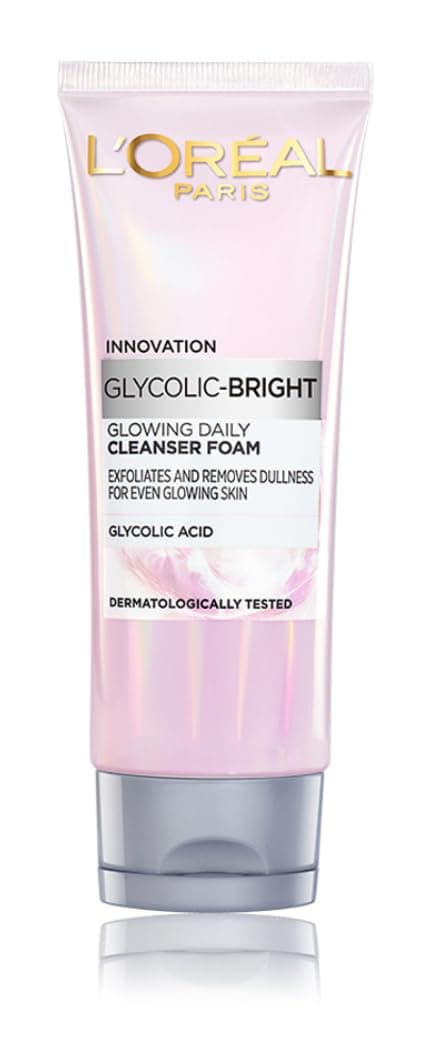
This face wash offers a good blend of actives for daily exfoliation and brightening, but consumers should manage expectations for dramatic results from a rinse-off product and be aware of conflicting ingredient information online.
₹191 • Analysed 22 October 2026
This L'Oreal face wash is positioned for brightening and dullness, a high-demand category in India due to prevalent pigmentation concerns. The price point is competitive within the mass-market segment, especially with frequent discounts. However, the presence of Triclosan and strong claims like 'removes melanin' could attract ASCI scrutiny if not adequately substantiated with finished-product clinical data. The discrepancy in INCI lists across platforms is a significant transparency issue for Indian consumers seeking clarity on active ingredients.
Independent and free. The Clean Sheet takes no money from brands to analyse, rank, or approve a product. This is a web evidence analysis, not a Clean Sheet certification. We checked the ingredient list, publicly available test reports, marketing claims, and formula logic using only public information available at the time of analysis.
Dermatologically tested and proven on Asian skin tones for brightening results. Glycolic Acid is a known exfoliant, but as a rinse-off product, the extent of 'removing dullness' and achieving 'even glowing skin' is limited by contact time. Actives like Glycolic Acid and Vitamin C are listed after Phenoxyethanol in the provided INCI, suggesting concentrations likely below 1%.
Contains multiple surfactants (Lauric Acid, Myristic Acid, Coco-Glucoside) which are effective cleansing agents. This is a standard function for a face wash.
While ingredients like Glycolic Acid, Kojic Acid, Liquorice Extract, and Vitamin C are known to help with pigmentation, 'removing melanin' is a strong, absolute claim for a rinse-off product. No finished-product clinical evidence is publicly visible to support this specific mechanism of action for this face wash. This claim is likely borrowed from ingredient-level research.
Glycolic Acid is known to accelerate cell turnover. However, as a rinse-off product, the contact time is limited. The ingredient is also listed after Phenoxyethanol in the provided INCI, suggesting a concentration likely below 1%. No finished-product evidence for this specific claim is publicly visible.
Multiple sources state 'dermatologically tested'. This indicates finished product testing, though specific details of the testing (methodology, sample size, duration) are not publicly visible. The 'all skin types' claim for a product with multiple exfoliants (Glycolic, Salicylic, Lactic) and Triclosan should be approached with caution for very sensitive or compromised skin.
Claimed on Zepto. While 'dermatologically tested' is mentioned widely, specific details of a 'clinical study' proving 'brightening results' (sample size, duration, methodology, quantified results) are not publicly visible for the finished product. This claim is ambitious for a rinse-off product with actives likely below 1%.
Contains humectants like Glycerine, Sorbitol, Propylene Glycol, and D-Panthenol which can provide hydration. Exfoliants (Glycolic, Salicylic, Lactic) remove dead skin cells. However, 'intensely hydrates' is a strong claim for a rinse-off product, where most hydrating ingredients are washed away. Niacinamide is present before the 1% line, which can support barrier function and hydration.
Glycolic Acid is present in the provided INCI. Its small molecular size and exfoliating properties are well-established ingredient-level facts. However, in this rinse-off formula, Glycolic Acid is listed after Phenoxyethanol, suggesting a concentration likely below 1%, which limits its 'deep penetration' and 'gentle exfoliation' efficacy for a face wash.
What we could confirm from public sources and the verified ingredient list.
Ingredient Safety & Toxicity
Full ingredient list retrieved and verified against INCIDecoder.
Screened against the ingredient database (14 of 26 ingredients matched); no cosmetics-prohibited ingredient found.
triclosan: Antimicrobial with endocrine-activity concern; tightly restricted.
No IARC-classified or formaldehyde-releasing ingredient found in the database screen.
No commonly-comedogenic ingredient found - a reasonable fit for acne-prone skin.
Irritation & Allergen Risk
Fragranced, but individual allergens are hidden behind 'Parfum' rather than declared.
No high-sensitisation preservative (MI/MCI/formaldehyde-releaser) from our screen was found.
Uses milder (non-sulphate) surfactants.
Brand claims dermatologist testing (claim stated; underlying report not seen).
Ingredient Transparency
The full INCI list is publicly available, not just hero ingredients.
Active percentages are disclosed for the hero ingredient(s).
Ingredients are listed in the descending order required by India Cosmetics Rules 2020.
Standards & Compliance
Usage warnings and directions are clear on the label.
Screened against a curated reference set that we are continuing to verify and expand, so “clear” means no flag from that set, not a guarantee. Not a substitute for a full toxicological or clinical assessment.
| Ingredient |
|---|
Aqua |
Stearic Acid |
Lauric Acid |
Glycerine |
Sorbitol |
Myristic Acid |
Coco-Glucoside |
Propylene Glycol |
Kojic Acid Globules |
Liquorice Extract |
Phenoxyethanol |
Ethylhexylglycerin |
Niacinamide |
Sodium PEG-7 Olive Oil Carboxylate |
Sodium Hydroxide |
Salicylic Acid <2% |
Triclosan |
Allantoin |
D-Panthenol |
Disodium EDTA |
Glycolic Acid |
Lactic Acid |
Vitamin E |
Vitamin C |
Potassium Hydroxide |
Fragrance (Ifra Certified Allergen Free Fragrance) |
INCI order as declared on packaging. Position reflects approximate concentration (high to low).
Triclosan is restricted in EU cosmetics (Annex V, max 0.3% in rinse-off products). Its presence here would require compliance with these limits.
No prohibited ingredients identified. Triclosan is permitted in India at up to 0.3% in rinse-off products.
No prohibited or restricted ingredients identified.
Triclosan is generally recognized as safe and effective for certain OTC drug uses (e.g., antibacterial soaps) but its use in rinse-off cosmetics has faced scrutiny and restrictions in some categories.
No prohibited or restricted ingredients identified.
No prohibited or restricted ingredients identified.
No prohibited or restricted ingredients identified.
No prohibited or restricted ingredients identified.
No prohibited or restricted ingredients identified.
No prohibited or restricted ingredients identified.
Flags are based on publicly available INCI only. Not a substitute for full regulatory compliance assessment.
“Removes melanin from the upper layer of the skin which in turn helps to reveal clear skin.”
While strong, 'removes melanin' for cosmetic purposes is generally not a drug claim unless it promises to treat a medical condition like melasma.
“Removes melanin and dark spots.”
Uses absolute language ('removes melanin and dark spots') for a cosmetic product without specific finished-product clinical proof of this endpoint.
“Alcohol-free, fragrance-free, paraben-devoid offering has been deemed fit for all skin types.”
The claim 'fragrance-free' is contradicted by the presence of 'Fragrance (Ifra Certified Allergen Free Fragrance)' in the provided INCI. This is a direct factual inaccuracy in advertising.
“Clinically proven to significantly decrease the number of blemishes, blackheads and acne.”
Claims to 'decrease blemishes, blackheads and acne' with 'clinically proven' language, especially if combined with specific drug actives (like Salicylic Acid, which is present in this product, though the claim is misattributed), borders on drug territory for a cosmetic product without a drug license.
Dermatologically tested and proven on Asian skin tones for brightening results. Glycolic Acid is a known exfoliant, but as a rinse-off product, the extent of 'removing dullness' and achieving 'even glowing skin' is limited by contact time. Actives like Glycolic Acid and Vitamin C are listed after Phenoxyethanol in the provided INCI, suggesting concentrations likely below 1%.
Evidence visible
Contains multiple surfactants (Lauric Acid, Myristic Acid, Coco-Glucoside) which are effective cleansing agents. This is a standard function for a face wash.
Mentioned only
While ingredients like Glycolic Acid, Kojic Acid, Liquorice Extract, and Vitamin C are known to help with pigmentation, 'removing melanin' is a strong, absolute claim for a rinse-off product. No finished-product clinical evidence is publicly visible to support this specific mechanism of action for this face wash. This claim is likely borrowed from ingredient-level research.
Mentioned only
Glycolic Acid is known to accelerate cell turnover. However, as a rinse-off product, the contact time is limited. The ingredient is also listed after Phenoxyethanol in the provided INCI, suggesting a concentration likely below 1%. No finished-product evidence for this specific claim is publicly visible.
Mentioned only
Multiple sources state 'dermatologically tested'. This indicates finished product testing, though specific details of the testing (methodology, sample size, duration) are not publicly visible. The 'all skin types' claim for a product with multiple exfoliants (Glycolic, Salicylic, Lactic) and Triclosan should be approached with caution for very sensitive or compromised skin.
Evidence visible
Claimed on Zepto. While 'dermatologically tested' is mentioned widely, specific details of a 'clinical study' proving 'brightening results' (sample size, duration, methodology, quantified results) are not publicly visible for the finished product. This claim is ambitious for a rinse-off product with actives likely below 1%.
Evidence visible
Contains humectants like Glycerine, Sorbitol, Propylene Glycol, and D-Panthenol which can provide hydration. Exfoliants (Glycolic, Salicylic, Lactic) remove dead skin cells. However, 'intensely hydrates' is a strong claim for a rinse-off product, where most hydrating ingredients are washed away. Niacinamide is present before the 1% line, which can support barrier function and hydration.
Mentioned only
Glycolic Acid is present in the provided INCI. Its small molecular size and exfoliating properties are well-established ingredient-level facts. However, in this rinse-off formula, Glycolic Acid is listed after Phenoxyethanol, suggesting a concentration likely below 1%, which limits its 'deep penetration' and 'gentle exfoliation' efficacy for a face wash.
Mentioned only
Similar to 'removes melanin from the upper layer'. This is an ambitious claim for a rinse-off product. While actives like Glycolic Acid, Kojic Acid, Liquorice Extract, and Vitamin C can help reduce the *appearance* of dark spots over time with consistent use in leave-on products, 'removes' is an absolute term not supported by finished-product clinical evidence for this face wash.
Mentioned only
The provided INCI does not list any denatured alcohols or parabens, supporting these 'free-from' claims. However, the provided INCI *does* list 'Fragrance (Ifra Certified Allergen Free Fragrance)', directly contradicting the 'fragrance-free' part of this claim. This claim appears in editorial content, not directly from the brand's product page. The 'all skin types' claim is also broad for a product with multiple exfoliants and Triclosan.
Missing
Public evidence the brand could provide to close verification gaps
This analysis evaluates brand claims against visible evidence and formula logic. It does not replace a full ingredient safety analysis or a clinical product test. Results vary by individual, and the consumer should always read the full ingredient list and follow usage guidance.
Are you the brand? If you have published test data or want to request a re-analysis, write to us at hello@thecleansheet.in.
