Getting you a comprehensive review of the product
Reading every ingredient in the formula…
Getting you a comprehensive review of the product
Reading every ingredient in the formula…
Join The Clean Sheet™ community
Science-backed beauty tips, ingredient alerts, and early access. Straight to your WhatsApp.
Join for free →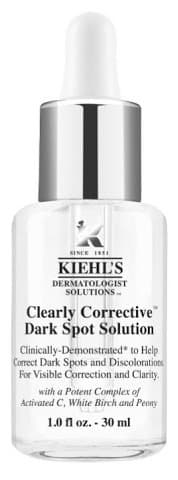
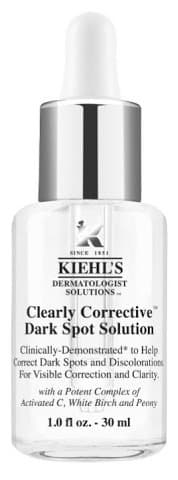
Kiehl's flagship brightening serum uses 3-O-Ethyl Ascorbic Acid (a stable Vitamin C ether derivative) as its brightening active alongside Hydroxypropyl Tetrahydropyrantriol. The formula has meaningful concerns worth considering: Alcohol Denat appears at a meaningful concentration, which may contribute to barrier disruption with prolonged daily use on compromised skin. Lavender Oil and its declared allergen Linalool are present in a brightening leave-on product typically used on reactive, PIH-prone skin. Citrus Aurantium Tachibana Peel Extract introduces phototoxic potential in what is typically a morning product.
₹4,200-₹5,000 • Analysed 10 June 2026
Dark spot treatment is one of the highest-demand skincare categories in India due to high UV exposure, post-acne PIH, and melasma prevalence. The brightening active (3-O-Ethyl Ascorbic Acid) is effective in principle. However, the combination of Alcohol Denat and a fragrance allergen is worth weighing for Indian consumers whose skin is often already reactive or sensitised from UV-induced PIH. Patch testing before daily use is strongly recommended.
Independent and free. The Clean Sheet takes no money from brands to review, rank, or approve a product. This is a web evidence review, not a Clean Sheet certification. We checked the ingredient list, publicly available test reports, marketing claims, and formula logic using only public information available at the time of review.
3-O-Ethyl Ascorbic Acid is a legitimate brightening active with supporting literature, but the finished product concentration is not disclosed and no clinical brightening study for the finished product is publicly accessible.
Kiehl's states this broadly across its range but does not publish a study with methodology, sample size, or result for this specific product.
The active is plausible for PIH, but the presence of Alcohol Denat and a fragrance allergen in a leave-on product targeting sensitised, reactive skin works against this claim without a published tolerance or irritancy study.
The 'Clearly Corrective' branding implies a clean, corrective product, but Lavender Oil, Linalool, and a phototoxic citrus extract are present in the formula without disclosure in marketing communications.
How we read this product across 5 areas. Open any row for the full rationale.
Three stacking concerns in a leave-on brightening serum intended for reactive, PIH-prone skin. First, Alcohol Denat appears at a meaningful concentration in the formula (not the primary ingredient but well up in the list) and is a documented barrier disruptor with daily leave-on use on compromised skin. Second, Lavandula Angustifolia Oil and its declared allergen Linalool introduce a fragrance sensitisation risk. Fragrance allergy is the most common cause of contact reactions, and a brightening serum typically sits on already-reactive skin for extended periods. Third, Citrus Aurantium Tachibana Peel Extract contains furanocoumarins with phototoxic potential, making UV sensitisation a genuine concern in a product typically applied in the morning. Propylene Glycol appearing high in the formula acts as a penetration enhancer, which may amplify delivery of all active ingredients including the sensitising ones.
The brightening active, 3-O-Ethyl Ascorbic Acid, is a stable Vitamin C ether derivative with good published evidence for brightening and antioxidant activity. It appears at a plausible position in the formula, though its exact concentration is not publicly disclosed. Hydroxypropyl Tetrahydropyrantriol contributes hydration and Adenosine adds a soothing benefit. The combination of Alcohol Denat as a delivery vehicle and Salicylic Acid at a mid-formula position increases the irritation-stacking risk for daily use. pH data is not publicly available, which limits independent assessment of the formula's pH-dependent performance and comfort profile.
The full ingredient list is published and Linalool is declared as required under EU regulation. Active concentrations for the brightening derivative are not disclosed. The 'Clearly Corrective' branding implies a clean, corrective formula, but the presence of Alcohol Denat, Lavender Oil, and a phototoxic citrus extract is not acknowledged anywhere in product communications. The phototoxic risk of the citrus extract is particularly relevant given that this serum is typically marketed and used as a morning brightening product. No published clinical study for the finished product's brightening efficacy is accessible.
“Dark spot correction / brightening” 3-O-Ethyl Ascorbic Acid is a legitimate brightening active with supporting literature, but the finished product concentration is not disclosed and no clinical brightening study for the finished product is publicly accessible.
“Dermatologist tested” Kiehl's states this broadly across its range but does not publish a study with methodology, sample size, or result for this specific product.
“Suitable for use on post-inflammatory hyperpigmentation” The active is plausible for PIH, but the presence of Alcohol Denat and a fragrance allergen in a leave-on product targeting sensitised, reactive skin works against this claim without a published tolerance or irritancy study.
Kiehl's states 'dermatologist tested' but does not publish a study with lab name, method, or result for this product. No published clinical brightening study, no patch test report, and no phototoxicity assessment is publicly accessible for the finished product. The full INCI is on kiehls.com. This is a Grade C profile: the brand implies testing has occurred but supporting documentation is not publicly visible.
Application instructions are available on the brand page. There is no prominent guidance about the phototoxic potential of the citrus extract in a morning product, no specific warning about the Alcohol Denat-Lavender Oil combination for reactive or sensitised skin, and no patch test recommendation prominent in the product communications.
| Ingredient |
|---|
Aqua/Water |
Propylene Glycol |
Glycerin |
Alcohol Denat |
PEG/PPG/Polybutylene Glycol-8/5/3 Glycerin |
Hydroxypropyl Tetrahydropyrantriol |
3-O-Ethyl Ascorbic Acid |
PPG-6-Decyltetradeceth-30 |
Phenoxyethanol |
Salicylic Acid |
Xanthan Gum |
Hydroxyethylcellulose |
Potassium Hydroxide |
Citric Acid |
Sodium Citrate |
Tocopheryl Acetate |
Lavandula Angustifolia Oil |
Disodium EDTA |
Adenosine |
Linalool |
Butylene Glycol |
Tocopherol |
Citrus Aurantium Tachibana Peel Extract |
Paeonia Suffruticosa Root Extract |
INCI order as declared on packaging. Position reflects approximate concentration (high to low).
No obvious public red flag found
No obvious public red flag found
No obvious public red flag found
No obvious public red flag found
No obvious public red flag found
No obvious public red flag found
No obvious carcinogenicity flag found
No obvious public red flag found
Not triggered
Not triggered
Flags are based on publicly available INCI only. Not a substitute for full regulatory compliance review.
3-O-Ethyl Ascorbic Acid is a legitimate brightening active with supporting literature, but the finished product concentration is not disclosed and no clinical brightening study for the finished product is publicly accessible.
Mentioned only
Kiehl's states this broadly across its range but does not publish a study with methodology, sample size, or result for this specific product.
Mentioned only
The active is plausible for PIH, but the presence of Alcohol Denat and a fragrance allergen in a leave-on product targeting sensitised, reactive skin works against this claim without a published tolerance or irritancy study.
Mentioned only
The 'Clearly Corrective' branding implies a clean, corrective product, but Lavender Oil, Linalool, and a phototoxic citrus extract are present in the formula without disclosure in marketing communications.
Missing
Public evidence the brand could provide to close verification gaps
This assessment is based only on publicly available INCI, claims, and test evidence. It is not a full Clean Sheet certification. Full certification requires confidential formula review, exact concentrations, supplier documentation, manufacturing records, packaging compatibility, preservative efficacy, stability, and complete claim validation.
Are you the brand? If you have published test data or want to request a re-review, write to us at hello@thecleansheet.in.
How we read this product across 5 areas. Open any row for the full rationale.
Three stacking concerns in a leave-on brightening serum intended for reactive, PIH-prone skin. First, Alcohol Denat appears at a meaningful concentration in the formula (not the primary ingredient but well up in the list) and is a documented barrier disruptor with daily leave-on use on compromised skin. Second, Lavandula Angustifolia Oil and its declared allergen Linalool introduce a fragrance sensitisation risk. Fragrance allergy is the most common cause of contact reactions, and a brightening serum typically sits on already-reactive skin for extended periods. Third, Citrus Aurantium Tachibana Peel Extract contains furanocoumarins with phototoxic potential, making UV sensitisation a genuine concern in a product typically applied in the morning. Propylene Glycol appearing high in the formula acts as a penetration enhancer, which may amplify delivery of all active ingredients including the sensitising ones.
The brightening active, 3-O-Ethyl Ascorbic Acid, is a stable Vitamin C ether derivative with good published evidence for brightening and antioxidant activity. It appears at a plausible position in the formula, though its exact concentration is not publicly disclosed. Hydroxypropyl Tetrahydropyrantriol contributes hydration and Adenosine adds a soothing benefit. The combination of Alcohol Denat as a delivery vehicle and Salicylic Acid at a mid-formula position increases the irritation-stacking risk for daily use. pH data is not publicly available, which limits independent assessment of the formula's pH-dependent performance and comfort profile.
The full ingredient list is published and Linalool is declared as required under EU regulation. Active concentrations for the brightening derivative are not disclosed. The 'Clearly Corrective' branding implies a clean, corrective formula, but the presence of Alcohol Denat, Lavender Oil, and a phototoxic citrus extract is not acknowledged anywhere in product communications. The phototoxic risk of the citrus extract is particularly relevant given that this serum is typically marketed and used as a morning brightening product. No published clinical study for the finished product's brightening efficacy is accessible.
“Dark spot correction / brightening” 3-O-Ethyl Ascorbic Acid is a legitimate brightening active with supporting literature, but the finished product concentration is not disclosed and no clinical brightening study for the finished product is publicly accessible.
“Dermatologist tested” Kiehl's states this broadly across its range but does not publish a study with methodology, sample size, or result for this specific product.
“Suitable for use on post-inflammatory hyperpigmentation” The active is plausible for PIH, but the presence of Alcohol Denat and a fragrance allergen in a leave-on product targeting sensitised, reactive skin works against this claim without a published tolerance or irritancy study.
Kiehl's states 'dermatologist tested' but does not publish a study with lab name, method, or result for this product. No published clinical brightening study, no patch test report, and no phototoxicity assessment is publicly accessible for the finished product. The full INCI is on kiehls.com. This is a Grade C profile: the brand implies testing has occurred but supporting documentation is not publicly visible.
Application instructions are available on the brand page. There is no prominent guidance about the phototoxic potential of the citrus extract in a morning product, no specific warning about the Alcohol Denat-Lavender Oil combination for reactive or sensitised skin, and no patch test recommendation prominent in the product communications.
Clearly Corrective Dark Spot Solution is in Good Standing with The Clean Sheet: broadly sound, with only minor gaps such as a claim that is plausible but not publicly proven. Kiehl's flagship brightening serum uses 3-O-Ethyl Ascorbic Acid (a stable Vitamin C ether derivative) as its brightening active alongside Hydroxypropyl Tetrahydropyrantriol. The formula has meaningful concerns worth considering: Alcohol Denat appears at a meaningful concentration, which may contribute to barrier disruption with prolonged daily use on compromised skin. Lavender Oil and its declared allergen Linalool are present in a brightening leave-on product typically used on reactive, PIH-prone skin. Citrus Aurantium Tachibana Peel Extract introduces phototoxic potential in what is typically a morning product.
Our verdict is "Good Standing". This assessment is based only on publicly available INCI, claims, and test evidence. It is not a full Clean Sheet certification. Full certification requires confidential formula review, exact concentrations, supplier documentation, manufacturing records, packaging compatibility, preservative efficacy, stability, and complete claim validation.
We checked 4 on-pack claims: 0 of 4 are publicly supported, 3 need more proof, 1 is not publicly supported. For example, "Dark spot correction / brightening" — needs proof.
Clearly Corrective Dark Spot Solution retails for ₹4,200-₹5,000 in India. It targets dark spots + brightening.