Getting you a comprehensive review of the product
Reading every ingredient in the formula…
Getting you a comprehensive review of the product
Reading every ingredient in the formula…
Join The Clean Sheet™ community
Science-backed beauty tips, ingredient alerts, and early access. Straight to your WhatsApp.
Join for free →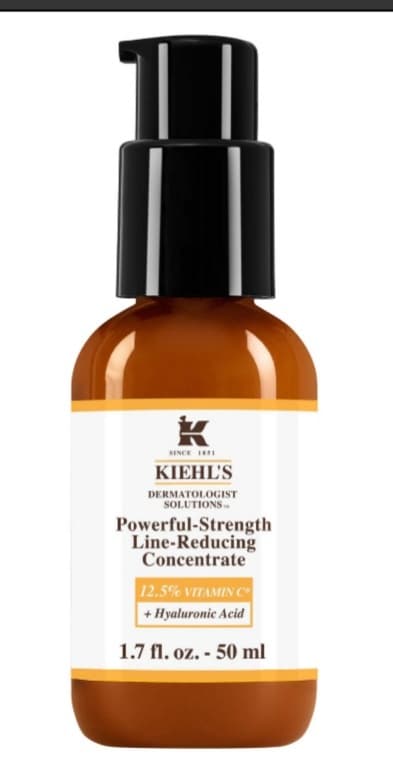
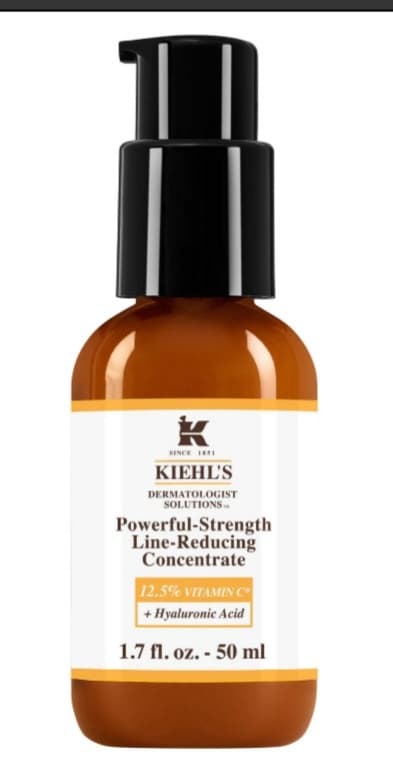
Kiehl's Vitamin C serum uses a dual-form approach: 10.5% L-Ascorbic Acid (potent, low pH) combined with 2% Ascorbyl Glucoside (a stable derivative), and unusually Kiehl's publicly discloses both concentrations, which is a meaningful transparency positive at this price point. Significant formulation concerns also exist: Cyclohexasiloxane (D6 silicone) is EU-restricted for rinse-off products and, while permitted in leave-on formats at limited concentrations, it is under increasing regulatory and environmental scrutiny. Citrus peel oils (Orange and Lemon) plus declared allergens Limonene and Citral create real phototoxicity and UV sensitisation risk in what is typically a morning application.
₹5,800-₹6,800 • Analysed 10 June 2026
A high-potency Vitamin C serum is highly relevant for India, where UV-induced oxidative stress, hyperpigmentation, and dull skin are among the most common skin concerns. However, using a citrus-oil fragrant daytime Vitamin C in India's intense UV environment meaningfully compounds phototoxicity risk. Indian consumers using this product should follow with a broad-spectrum SPF 50+ and avoid applying to broken or reactive skin.
Independent and free. The Clean Sheet takes no money from brands to review, rank, or approve a product. This is a web evidence review, not a Clean Sheet certification. We checked the ingredient list, publicly available test reports, marketing claims, and formula logic using only public information available at the time of review.
Kiehl's explicitly states 10.5% on the product page and the ingredient's position in the formula is consistent with this concentration.
Brand confirms 2% Ascorbyl Glucoside on the product page; consistent with its position in the ingredient list.
L-Ascorbic Acid at 10.5% has published ingredient-level evidence for collagen stimulation, but no finished product anti-wrinkle clinical study is publicly accessible.
The presence of citrus peel oils with phototoxic potential means a clear SPF requirement should be stated; the brand recommends SPF generally but does not specifically disclose the phototoxic risk of the citrus components.
How we read this product across 5 areas. Open any row for the full rationale.
Citrus oils are declared by botanical name rather than grouped under a generic fragrance listing, which is the more transparent approach. However, both Sweet Orange Peel Oil and Lemon Peel Oil are present alongside their declared allergens Limonene and Citral. In a daytime leave-on serum, citrus peel oils carry documented phototoxic potential: they can increase skin sensitivity to UV radiation, which is especially worth considering in India's high-UV environment. Cyclohexasiloxane (D6) is a cyclic silicone EU-restricted for rinse-off cosmetics since June 2020 due to environmental persistence concerns; it remains technically permitted in leave-on products at restricted levels but faces increasing regulatory scrutiny. Acrylonitrile/Methyl Methacrylate/Vinylidene Chloride Copolymer is a synthetic polymer with a microplastic concern profile under EU Microplastics Restriction 2023 considerations.
The dual Vitamin C approach is genuinely well-designed. L-Ascorbic Acid at 10.5% is the most clinically studied form for brightening and collagen stimulation, potent and effective at this level. Ascorbyl Glucoside at 2% is a stable derivative that extends and stabilises the overall Vitamin C activity. Kiehl's publicly discloses both concentrations, which is an uncommon level of transparency and allows independent verification of the active dose. Hydrolyzed Hyaluronic Acid and Adenosine add supporting benefits. pH is not publicly disclosed; for L-Ascorbic Acid, pH is critical to stability and efficacy, so this is a gap in the public evidence even with the concentration data available.
Good evidence for stated claims based on public information.
Kiehl's publicly states 10.5% L-Ascorbic Acid and 2% Ascorbyl Glucoside on the product page, which is an uncommon and positive level of transparency for an active serum. The full ingredient list is published. Where the gap exists: the phototoxic risk of the citrus oils in a typical morning product is not disclosed in any consumer communication. The environmental regulatory status of D6 silicone and the microplastic concern from the copolymer are also unaddressed. No published clinical anti-ageing or brightening study for the finished product is publicly accessible.
“10.5% L-Ascorbic Acid” Kiehl's explicitly states 10.5% on the product page and the ingredient's position in the formula is consistent with this concentration.
“2% Ascorbyl Glucoside” Brand confirms 2% Ascorbyl Glucoside on the product page; consistent with its position in the ingredient list.
“Line-reducing / anti-ageing efficacy” L-Ascorbic Acid at 10.5% has published ingredient-level evidence for collagen stimulation, but no finished product anti-wrinkle clinical study is publicly accessible.
The brand's public disclosure of active concentrations (10.5% LAA, 2% AG) is a genuinely positive transparency signal and raises this above the typical Grade C floor for brands...
The brand's public disclosure of active concentrations (10.5% LAA, 2% AG) is a genuinely positive transparency signal and raises this above the typical Grade C floor for brands without published test reports. However, no lab-confirmed stability study, no published anti-wrinkle or brightening clinical study for the finished product, and no phototoxicity assessment for the citrus oils are publicly accessible. The formula pH, which critically determines the activity and stability of L-Ascorbic Acid, is not publicly stated. Overall Grade C: meaningful ingredient transparency, but clinical and test documentation is not publicly visible.
Application instructions are available and the brand recommends SPF use after application. No explicit phototoxicity warning about the citrus oil combination is included in product communications. No layering guidance for consumers using this alongside other actives (retinoids, AHAs) is provided.
| Ingredient |
|---|
Propylene Glycol |
Dimethicone |
Glycerin |
Ascorbic Acid (L-Ascorbic Acid) |
Ethylhexyl Palmitate |
Cetyl PEG/PPG-10/1 Dimethicone |
Dimethicone Crosspolymer |
Ascorbyl Glucoside |
Cyclohexasiloxane (D6) |
Hydroxyethylpiperazine Ethane Sulfonic Acid |
Lauroyl Lysine |
Acrylonitrile/Methyl Methacrylate/Vinylidene Chloride Copolymer |
Polysilicone-11 |
Adenosine |
Hydrolyzed Hyaluronic Acid |
Limonene |
Isobutane |
Citrus Aurantium Dulcis Peel Oil |
Citrus Limon Peel Oil |
Citral |
Pentaerythrityl Tetra-Di-T-Butyl Hydroxyhydrocinnamate |
INCI order as declared on packaging. Position reflects approximate concentration (high to low).
No obvious public red flag found
No obvious public red flag found
No obvious public red flag found
No obvious public red flag found
No obvious public red flag found
No obvious public red flag found
No obvious carcinogenicity flag found
Potential concern found - Cyclohexasiloxane (D6) under AICIS environmental review
Not triggered
Not triggered
Flags are based on publicly available INCI only. Not a substitute for full regulatory compliance review.
Kiehl's explicitly states 10.5% on the product page and the ingredient's position in the formula is consistent with this concentration.
Evidence visible
Brand confirms 2% Ascorbyl Glucoside on the product page; consistent with its position in the ingredient list.
Evidence visible
L-Ascorbic Acid at 10.5% has published ingredient-level evidence for collagen stimulation, but no finished product anti-wrinkle clinical study is publicly accessible.
Mentioned only
The presence of citrus peel oils with phototoxic potential means a clear SPF requirement should be stated; the brand recommends SPF generally but does not specifically disclose the phototoxic risk of the citrus components.
Missing
Public evidence the brand could provide to close verification gaps
This assessment is based only on publicly available INCI, claims, and test evidence. It is not a full Clean Sheet certification. Full certification requires confidential formula review, exact concentrations, supplier documentation, manufacturing records, packaging compatibility, preservative efficacy, stability, and complete claim validation.
Are you the brand? If you have published test data or want to request a re-review, write to us at hello@thecleansheet.in.
How we read this product across 5 areas. Open any row for the full rationale.
Citrus oils are declared by botanical name rather than grouped under a generic fragrance listing, which is the more transparent approach. However, both Sweet Orange Peel Oil and Lemon Peel Oil are present alongside their declared allergens Limonene and Citral. In a daytime leave-on serum, citrus peel oils carry documented phototoxic potential: they can increase skin sensitivity to UV radiation, which is especially worth considering in India's high-UV environment. Cyclohexasiloxane (D6) is a cyclic silicone EU-restricted for rinse-off cosmetics since June 2020 due to environmental persistence concerns; it remains technically permitted in leave-on products at restricted levels but faces increasing regulatory scrutiny. Acrylonitrile/Methyl Methacrylate/Vinylidene Chloride Copolymer is a synthetic polymer with a microplastic concern profile under EU Microplastics Restriction 2023 considerations.
The dual Vitamin C approach is genuinely well-designed. L-Ascorbic Acid at 10.5% is the most clinically studied form for brightening and collagen stimulation, potent and effective at this level. Ascorbyl Glucoside at 2% is a stable derivative that extends and stabilises the overall Vitamin C activity. Kiehl's publicly discloses both concentrations, which is an uncommon level of transparency and allows independent verification of the active dose. Hydrolyzed Hyaluronic Acid and Adenosine add supporting benefits. pH is not publicly disclosed; for L-Ascorbic Acid, pH is critical to stability and efficacy, so this is a gap in the public evidence even with the concentration data available.
Good evidence for stated claims based on public information.
Kiehl's publicly states 10.5% L-Ascorbic Acid and 2% Ascorbyl Glucoside on the product page, which is an uncommon and positive level of transparency for an active serum. The full ingredient list is published. Where the gap exists: the phototoxic risk of the citrus oils in a typical morning product is not disclosed in any consumer communication. The environmental regulatory status of D6 silicone and the microplastic concern from the copolymer are also unaddressed. No published clinical anti-ageing or brightening study for the finished product is publicly accessible.
“10.5% L-Ascorbic Acid” Kiehl's explicitly states 10.5% on the product page and the ingredient's position in the formula is consistent with this concentration.
“2% Ascorbyl Glucoside” Brand confirms 2% Ascorbyl Glucoside on the product page; consistent with its position in the ingredient list.
“Line-reducing / anti-ageing efficacy” L-Ascorbic Acid at 10.5% has published ingredient-level evidence for collagen stimulation, but no finished product anti-wrinkle clinical study is publicly accessible.
The brand's public disclosure of active concentrations (10.5% LAA, 2% AG) is a genuinely positive transparency signal and raises this above the typical Grade C floor for brands...
The brand's public disclosure of active concentrations (10.5% LAA, 2% AG) is a genuinely positive transparency signal and raises this above the typical Grade C floor for brands without published test reports. However, no lab-confirmed stability study, no published anti-wrinkle or brightening clinical study for the finished product, and no phototoxicity assessment for the citrus oils are publicly accessible. The formula pH, which critically determines the activity and stability of L-Ascorbic Acid, is not publicly stated. Overall Grade C: meaningful ingredient transparency, but clinical and test documentation is not publicly visible.
Application instructions are available and the brand recommends SPF use after application. No explicit phototoxicity warning about the citrus oil combination is included in product communications. No layering guidance for consumers using this alongside other actives (retinoids, AHAs) is provided.
Powerful-Strength Line-Reducing Concentrate is in Good Standing with The Clean Sheet: broadly sound, with only minor gaps such as a claim that is plausible but not publicly proven. Kiehl's Vitamin C serum uses a dual-form approach: 10.5% L-Ascorbic Acid (potent, low pH) combined with 2% Ascorbyl Glucoside (a stable derivative), and unusually Kiehl's publicly discloses both concentrations, which is a meaningful transparency positive at this price point. Significant formulation concerns also exist: Cyclohexasiloxane (D6 silicone) is EU-restricted for rinse-off products and, while permitted in leave-on formats at limited concentrations, it is under increasing regulatory and environmental scrutiny. Citrus peel oils (Orange and Lemon) plus declared allergens Limonene and Citral create real phototoxicity and UV sensitisation risk in what is typically a morning application.
Our verdict is "Good Standing". This assessment is based only on publicly available INCI, claims, and test evidence. It is not a full Clean Sheet certification. Full certification requires confidential formula review, exact concentrations, supplier documentation, manufacturing records, packaging compatibility, preservative efficacy, stability, and complete claim validation.
We checked 4 on-pack claims: 2 of 4 are publicly supported, 1 needs more proof, 1 is not publicly supported. For example, "10.5% L-Ascorbic Acid" — publicly supported.
Powerful-Strength Line-Reducing Concentrate retails for ₹5,800-₹6,800 in India. It targets anti-ageing + brightening (vitamin c).