Getting you a comprehensive review of the product
Reading every ingredient in the formula…
Getting you a comprehensive review of the product
Reading every ingredient in the formula…
Join The Clean Sheet™ community
Science-backed beauty tips, ingredient alerts, and early access. Straight to your WhatsApp.
Join for free →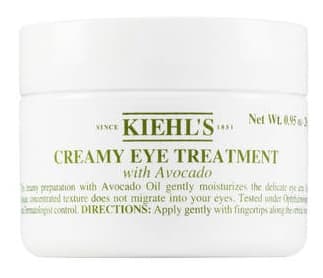
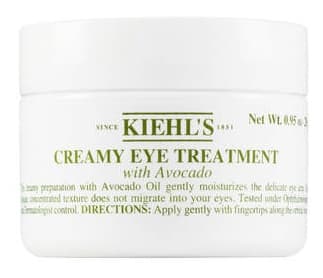
Kiehl's has reformulated its iconic Creamy Eye Treatment: the four-paraben preservation system (including Butylparaben) has been replaced with a modern Phenoxyethanol, Chlorphenesin, and P-Anisic Acid combination. This is a meaningful upgrade for the thin, highly vascular skin around the eye where ingredient absorption is enhanced. The reformulated base retains its signature emollient character with Shea Butter and Avocado Oil, and adds a multi-ester system for improved skin feel. Isopropyl Palmitate remains in the formula and is worth noting for users prone to milia under the eye.
₹3,200-₹3,800 • Analysed 10 June 2026
Eye creams are a high-purchase category in India. The reformulation removes Butylparaben, the most scrutinised ingredient in the previous version, which is a meaningful upgrade for the Indian market where paraben awareness among ingredient-literate consumers has risen. The rich emollient texture is particularly well-suited to dry northern Indian winters and air-conditioned office environments. For milia-prone under-eye skin, using sparingly and avoiding the immediate lash line is advisable.
Independent and free. The Clean Sheet takes no money from brands to review, rank, or approve a product. This is a web evidence review, not a Clean Sheet certification. We checked the ingredient list, publicly available test reports, marketing claims, and formula logic using only public information available at the time of review.
No Parfum, fragrance, or scent-use essential oils appear in the published ingredient list.
The published ingredient list confirms the removal of the previous four-paraben system; Phenoxyethanol, Chlorphenesin, and P-Anisic Acid are the current preservation system.
The emollient base (Shea Butter, Avocado Oil) is appropriate for dry eye-area skin, but no finished product hydration study with method and result is publicly accessible.
Kiehl's states this broadly but no published study with method, sample size, or result is accessible for this eye cream specifically.
How we read this product across 5 areas. Open any row for the full rationale.
Clean allergen profile with a fragrance free formula.
Reformulated: the four-paraben system including Butylparaben and Propylparaben has been removed and replaced with Phenoxyethanol, Chlorphenesin, and P-Anisic Acid. This significantly improves the safety profile for a leave-on product used around the thin, highly vascular eye area where ingredient absorption is enhanced. Chlorphenesin is a halogenated preservative and carries a minor sensitisation note at elevated concentrations, but is within accepted limits for leave-on use. Shea Butter and Avocado Oil are among the most well-tolerated cosmetic emollients. Isopropyl Palmitate remains in the formula; it has some reported comedogenicity relevant to milia-prone under-eye skin. No fragrance, no parabens, no dyes, no SLES.
Shea Butter and Avocado Oil form the core emollient base, both well-suited to the dry, thin eye area. The reformulation adds a multi-ester emollient system (Tridecyl Stearate, Isodecyl Salicylate, Tridecyl Trimellitate, Isocetyl Stearoyl Stearate, Dipentaerythrityl Hexacaprylate) that improves skin feel and texture without increasing heaviness. Copper PCA adds trace mineral antioxidant support. Sodium PCA provides natural humectancy. The formula is focused on hydration and emolliency rather than active anti-ageing treatment; it does not include peptides or retinoids. This is appropriate for a gentle daily eye cream and the formula logic is structurally sound.
The updated ingredient list is published on kiehls.com and confirms the reformulation away from parabens. The Avocado positioning is accurate: Persea Gratissima Oil appears at a meaningful stage in the formula. The paraben-free reformulation is not currently highlighted in active marketing communications, which is a missed opportunity. No active concentrations are disclosed. The 'dermatologist tested' claim is present but no published study is accessible.
“Fragrance-free” No Parfum, fragrance, or scent-use essential oils appear in the published ingredient list.
“Paraben-free (reformulated)” The published ingredient list confirms the removal of the previous four-paraben system; Phenoxyethanol, Chlorphenesin, and P-Anisic Acid are the current preservation system.
“Eye area hydration” The emollient base (Shea Butter, Avocado Oil) is appropriate for dry eye-area skin, but no finished product hydration study with method and result is publicly accessible.
Kiehl's states 'dermatologist tested' broadly but no published study with method, sample size, or result is accessible for this eye cream. No ocular safety assessment, no finished product milia or comedogenicity study, and no preservative efficacy test are publicly linked. The full INCI is available on kiehls.com, including confirmation of the reformulation. Grade C: testing is implied but documentation is not publicly visible.
Application instructions for the eye area are provided. Skin type suitability for dry skin is communicated. There is a note that the product is for the eye area. The milia risk from Isopropyl Palmitate is not mentioned in product communications, and the fact that the formula has been reformulated is not proactively disclosed to consumers who may remember the older version.
| Ingredient |
|---|
Aqua/Water |
Butyrospermum Parkii Butter |
Butylene Glycol |
Tridecyl Stearate |
PEG-30 Dipolyhydroxystearate |
Isodecyl Salicylate |
Tridecyl Trimellitate |
Persea Gratissima Oil |
Isocetyl Stearoyl Stearate |
Propylene Glycol |
Dipentaerythrityl Hexacaprylate/Hexacaprate |
Sorbitan Sesquioleate |
Magnesium Sulfate |
Hydrogenated Castor Oil |
Sodium PCA |
Phenoxyethanol |
Chlorphenesin |
Hydrogenated Jojoba Oil |
P-Anisic Acid |
Tocopheryl Acetate |
Isopropyl Palmitate |
Disodium EDTA |
Copper PCA |
Helianthus Annuus Seed Oil |
CI 40800 |
Beta-Carotene |
Citric Acid |
INCI order as declared on packaging. Position reflects approximate concentration (high to low).
No obvious public red flag found
No obvious public red flag found
No obvious public red flag found
No obvious public red flag found
No obvious public red flag found
No obvious public red flag found
No obvious carcinogenicity flag found
No obvious public red flag found
Not triggered
Not triggered
Flags are based on publicly available INCI only. Not a substitute for full regulatory compliance review.
No Parfum, fragrance, or scent-use essential oils appear in the published ingredient list.
Evidence visible
The published ingredient list confirms the removal of the previous four-paraben system; Phenoxyethanol, Chlorphenesin, and P-Anisic Acid are the current preservation system.
Evidence visible
The emollient base (Shea Butter, Avocado Oil) is appropriate for dry eye-area skin, but no finished product hydration study with method and result is publicly accessible.
Mentioned only
Kiehl's states this broadly but no published study with method, sample size, or result is accessible for this eye cream specifically.
Mentioned only
Public evidence the brand could provide to close verification gaps
This assessment is based only on publicly available INCI, claims, and test evidence. It is not a full Clean Sheet certification. Full certification requires confidential formula review, exact concentrations, supplier documentation, manufacturing records, packaging compatibility, preservative efficacy, stability, and complete claim validation.
Are you the brand? If you have published test data or want to request a re-review, write to us at hello@thecleansheet.in.
How we read this product across 5 areas. Open any row for the full rationale.
Clean allergen profile with a fragrance free formula.
Reformulated: the four-paraben system including Butylparaben and Propylparaben has been removed and replaced with Phenoxyethanol, Chlorphenesin, and P-Anisic Acid. This significantly improves the safety profile for a leave-on product used around the thin, highly vascular eye area where ingredient absorption is enhanced. Chlorphenesin is a halogenated preservative and carries a minor sensitisation note at elevated concentrations, but is within accepted limits for leave-on use. Shea Butter and Avocado Oil are among the most well-tolerated cosmetic emollients. Isopropyl Palmitate remains in the formula; it has some reported comedogenicity relevant to milia-prone under-eye skin. No fragrance, no parabens, no dyes, no SLES.
Shea Butter and Avocado Oil form the core emollient base, both well-suited to the dry, thin eye area. The reformulation adds a multi-ester emollient system (Tridecyl Stearate, Isodecyl Salicylate, Tridecyl Trimellitate, Isocetyl Stearoyl Stearate, Dipentaerythrityl Hexacaprylate) that improves skin feel and texture without increasing heaviness. Copper PCA adds trace mineral antioxidant support. Sodium PCA provides natural humectancy. The formula is focused on hydration and emolliency rather than active anti-ageing treatment; it does not include peptides or retinoids. This is appropriate for a gentle daily eye cream and the formula logic is structurally sound.
The updated ingredient list is published on kiehls.com and confirms the reformulation away from parabens. The Avocado positioning is accurate: Persea Gratissima Oil appears at a meaningful stage in the formula. The paraben-free reformulation is not currently highlighted in active marketing communications, which is a missed opportunity. No active concentrations are disclosed. The 'dermatologist tested' claim is present but no published study is accessible.
“Fragrance-free” No Parfum, fragrance, or scent-use essential oils appear in the published ingredient list.
“Paraben-free (reformulated)” The published ingredient list confirms the removal of the previous four-paraben system; Phenoxyethanol, Chlorphenesin, and P-Anisic Acid are the current preservation system.
“Eye area hydration” The emollient base (Shea Butter, Avocado Oil) is appropriate for dry eye-area skin, but no finished product hydration study with method and result is publicly accessible.
Kiehl's states 'dermatologist tested' broadly but no published study with method, sample size, or result is accessible for this eye cream. No ocular safety assessment, no finished product milia or comedogenicity study, and no preservative efficacy test are publicly linked. The full INCI is available on kiehls.com, including confirmation of the reformulation. Grade C: testing is implied but documentation is not publicly visible.
Application instructions for the eye area are provided. Skin type suitability for dry skin is communicated. There is a note that the product is for the eye area. The milia risk from Isopropyl Palmitate is not mentioned in product communications, and the fact that the formula has been reformulated is not proactively disclosed to consumers who may remember the older version.
Creamy Eye Treatment with Avocado is in Good Standing with The Clean Sheet: broadly sound, with only minor gaps such as a claim that is plausible but not publicly proven. Kiehl's has reformulated its iconic Creamy Eye Treatment: the four-paraben preservation system (including Butylparaben) has been replaced with a modern Phenoxyethanol, Chlorphenesin, and P-Anisic Acid combination. This is a meaningful upgrade for the thin, highly vascular skin around the eye where ingredient absorption is enhanced. The reformulated base retains its signature emollient character with Shea Butter and Avocado Oil, and adds a multi-ester system for improved skin feel. Isopropyl Palmitate remains in the formula and is worth noting for users prone to milia under the eye.
Our verdict is "Good Standing". This assessment is based only on publicly available INCI, claims, and test evidence. It is not a full Clean Sheet certification. Full certification requires confidential formula review, exact concentrations, supplier documentation, manufacturing records, packaging compatibility, preservative efficacy, stability, and complete claim validation.
We checked 4 on-pack claims: 2 of 4 are publicly supported, 2 need more proof. For example, "Fragrance-free" — publicly supported.
Creamy Eye Treatment with Avocado retails for ₹3,200-₹3,800 in India. It targets eye area hydration.